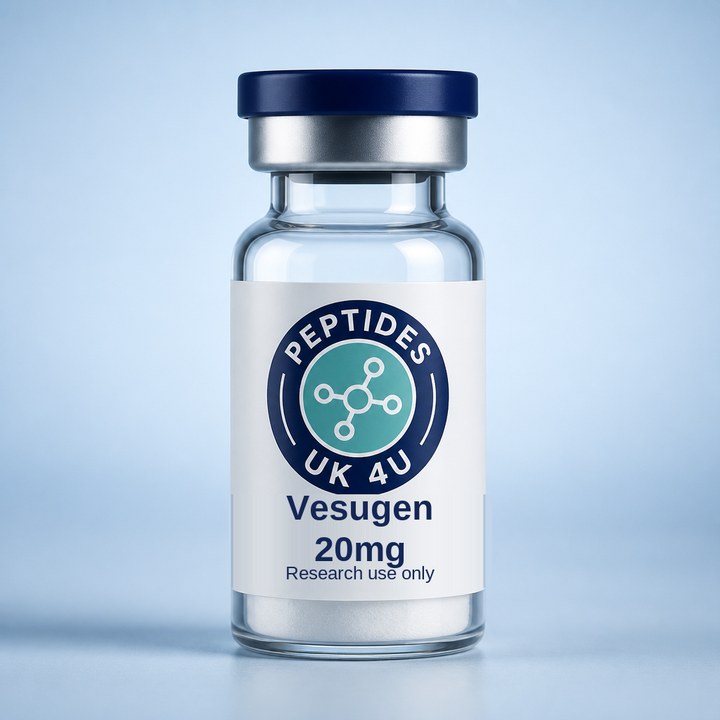
Vesugen is a tripeptide bioregulator thought to support vascular endothelial cell health. It is typically dosed via subcutaneous injection, with protocols suggesting a gradual increase from 500 mcg to 2 mg daily. Reconstitution involves mixing a 20 mg vial with 3.0 mL of bacteriostatic water to achieve a concentration of approximately 6.67 mg/mL.
- Dosage range: 500-2000 mcg daily.
- Reconstitute 20 mg vial with 3.0 mL bacteriostatic water.
- 1 unit on a U-100 syringe equals approximately 66.7 mcg.
- Administered via subcutaneous injection once daily.
- Cycle length typically 8-16 weeks.
Reconstitution
Vial strength
20 mg
Bacteriostatic water
3 mL
Concentration
6.67 mg/mL
1 unit = 0.01 mL = 66.7 mcg
- 1Draw 3.0 mL of bacteriostatic water using a sterile syringe.
- 2Carefully inject the water down the inner wall of the Vesugen vial, avoiding direct contact with the powder to prevent foaming.
- 3Gently swirl or roll the vial until the peptide powder is fully dissolved; do not shake.
- 4Label the reconstituted vial with the date and refrigerate it at 2–8 °C (35.6–46.4 °F), ensuring it is protected from light.
Dosing schedule
| Phase | Dose | On a U-100 syringe |
|---|---|---|
| Week 1 | 500 mcg | 7.5 units (0.075 mL) |
| Week 2 | 1000 mcg | 15 units (0.15 mL) |
| Week 3 | 1500 mcg | 22.5 units (0.225 mL) |
| Weeks 4–8+ | 1500–2000 mcg | 22.5–30 units (0.225–0.30 mL) |
Protocol detail
| Start | Begin with 500 mcg daily; gradually increase by approximately 500 mcg each week as tolerated. |
|---|---|
| Target | Aim for 1500–2000 mcg daily by Weeks 3–8 and beyond. |
| Frequency | Administer once per day via subcutaneous injection. |
| Cycle Length | Maintain for 8–12 weeks, with an option to extend to 16 weeks. |
| Timing | Inject at a consistent time each day; consistently rotate injection sites. |
Overview at a glance
| Goal | Support vascular endothelial function and cellular renewal over time. |
|---|---|
| Schedule | Daily subcutaneous injections for 8–12 weeks (extend to 16 weeks if desired). |
| Dose Range | 500–2000 mcg daily with gradual titration. |
| Reconstitution | 3.0 mL bacteriostatic water per 20 mg vial for precise measurements (~6.67 mg/mL). |
| Storage | Lyophilized vials frozen; reconstituted solution refrigerated; avoid repeated freeze–thaw cycles. |
How it works
Vesugen is a tripeptide bioregulator derived from amino acids found in vascular wall proteins. It is believed to support vascular endothelial cell proliferation by influencing the expression of the Ki-67 gene, which is crucial for cell division. The peptide may interact with specific gene promoter regions, suggesting an epigenetic regulatory mechanism. Additionally, research implies Vesugen could help normalize endothelin-1 levels and elevate sirtuin-1 (SIRT-1) expression in vascular endothelial cells, contributing to its vasoprotective properties and cellular renewal support. Its action may thus contribute to overall vascular health and anti-aging.
Reported effects
- May support vascular endothelial cell proliferation and renewal.
- Potential epigenetic regulation of Ki-67 gene expression.
- Suggested neuroprotective properties, potentially improving memory and attention.
- May restore synaptic plasticity in models of Alzheimer’s disease.
Reported side effects
- Generally well tolerated.
- Occasional mild injection-site reactions (e.g., redness, itching).
Storage
Lyophilised (unmixed)
Store at -20 °C (-4 °F) in dry, dark conditions; minimize moisture exposure.
After reconstitution
Refrigerate at 2–8 °C (35.6–46.4 °F); avoid freeze–thaw cycles; protect from light. Allow vials to reach room temperature before opening.
Supplies
| Peptide vials (Vesugen, 20 mg each) | — |
|---|---|
| Insulin Syringes (U-100) | Required daily; consider 30- or 50-unit syringes for finer measurements. |
| Bacteriostatic Water (10 mL bottles) | Needed for reconstitution (approx. 3.0 mL per vial). |
| Alcohol Swabs | For disinfecting vial stoppers and injection sites. |
| Sharps Container | For safe disposal of used syringes. |
Important notes
- Always use new, sterile insulin syringes and dispose of them properly in a sharps container.
- Rotate injection sites (e.g., abdomen, thighs, upper arms) to prevent irritation and ensure consistent absorption.
- Inject slowly and steadily, waiting a few seconds before withdrawing the needle.
- Maintain a daily log of doses and injection sites to ensure consistency and track progress.
- This information is for research and educational purposes only and is not medical advice or an endorsement for human consumption.
Frequently asked questions
What is the primary purpose of Vesugen?
Vesugen is a tripeptide bioregulator primarily studied for its potential to support vascular endothelial function and promote cellular renewal, particularly in the context of vascular health and anti-aging research.
How should I reconstitute a 20 mg vial of Vesugen?
To reconstitute, you should add 3.0 mL of bacteriostatic water to a 20 mg vial of Vesugen. Inject the water slowly down the inside wall of the vial to avoid foaming, then gently swirl until it's fully dissolved. This will create a concentration of approximately 6.67 mg/mL.
What is the recommended dosing schedule for Vesugen?
The recommended dosing starts at 500 mcg daily, gradually increasing by about 500 mcg each week until reaching a target of 1500-2000 mcg daily. This is typically done once per day via subcutaneous injection over an 8-16 week cycle.
Are there any specific storage guidelines for Vesugen?
Lyophilized Vesugen should be stored frozen at -20 °C (-4 °F). Once reconstituted, the solution should be refrigerated at 2–8 °C (35.6–46.4 °F) and protected from light. It's important to avoid repeated freeze-thaw cycles for reconstituted solution.
Educational reference only. These figures summarise how Vesugen is commonly described in research literature and supplier documentation. They are not a prescription, not medical advice, and not a recommendation to self-administer anything.
Related protocols
GHRP-2 (10 mg Vial)
Potent growth hormone secretagogue mimicking ghrelin's action.
MOTS-c (10 mg Vial)
Metabolic regulator enhancing insulin sensitivity, fat oxidation, and exercise capacity.
MOTS-c (20 mg Vial)
Metabolic regulator enhancing insulin sensitivity, fat oxidation, and exercise capacity.
MOTS-c (5 mg Vial)
Metabolic regulator enhancing insulin sensitivity and combating age-related decline.