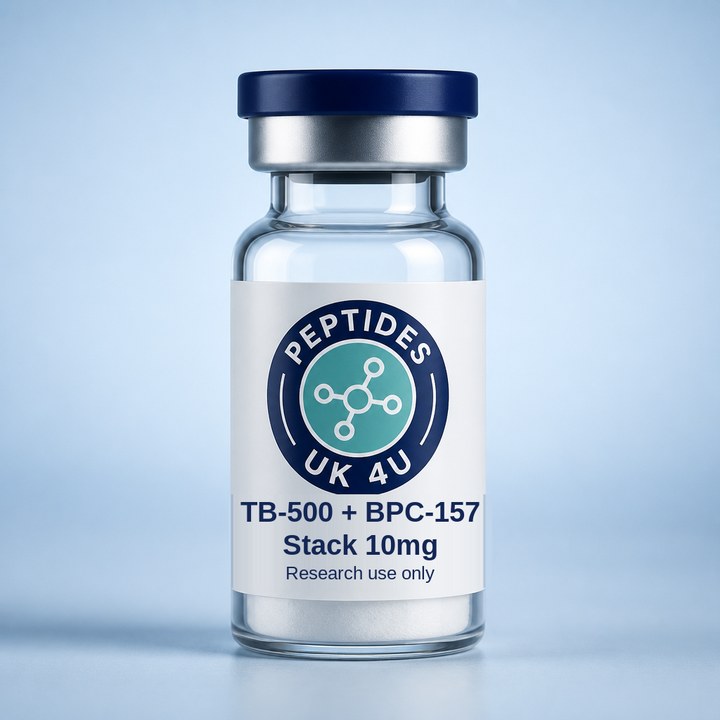
This protocol outlines the combined use of TB-500 and BPC-157 for synergistic tissue repair and regeneration. TB-500 is dosed weekly, while BPC-157 is administered daily, with specific reconstitution and injection instructions for each peptide. The combined approach aims to leverage their complementary mechanisms for enhanced healing.
- TB-500 promotes tissue repair and regeneration.
- BPC-157 accelerates musculoskeletal healing.
- Stacking aims for synergistic benefits.
- Dosing for both peptides is subcutaneous.
- Reconstitute each 10 mg vial with 3.0 mL bacteriostatic water.
Reconstitution
Vial strength
10 mg
Bacteriostatic water
3 mL
Concentration
3.33 mg/mL
1 unit = 0.01 mL = 33.3 mcg (U-100 syringe)
- 1Draw 3.0 mL of bacteriostatic water using a sterile syringe.
- 2Inject the water slowly down the side of the peptide vial, avoiding direct impact on the powder or creating foam.
- 3Gently swirl or roll the vial until the powder is completely dissolved. Do not shake vigorously.
- 4Label the reconstituted vial with the date and concentration, then refrigerate at 2–8 °C (35.6–46.4 °F), protected from light.
Dosing schedule
| Phase | Dose | On a U-100 syringe |
|---|---|---|
| TB-500 Weeks 1-4 (Loading) | 1250 mcg | 37.5 units (0.38 mL) |
| TB-500 Weeks 5-12 (Maintenance) | 1250 mcg | 37.5 units (0.38 mL) |
| BPC-157 Weeks 1-2 | 250 mcg | 7.5 units (0.08 mL) |
| BPC-157 Weeks 3-8 | 500 mcg | 15 units (0.15 mL) |
| BPC-157 Weeks 9-12 | 250 mcg | 7.5 units (0.08 mL) |
Protocol detail
| TB-500 Loading | 1,250 mcg (1.25 mg) twice weekly for the initial 4 weeks (totaling approximately 2.5 mg/week). |
|---|---|
| TB-500 Maintenance | 1,250 mcg (1.25 mg) once weekly from Weeks 5 through 12. |
| BPC-157 Initiation | Begin with 250 mcg daily for the first 2 weeks, then increase the dose to 500 mcg daily. |
| BPC-157 Taper | Reduce the dose back to 250 mcg daily for the final 4 weeks (Weeks 9–12). |
| Timing | Maintain consistent injection times. For BPC-157, injecting near the site of injury is often preferred. |
Overview at a glance
| Goal | Support tissue repair, reduce inflammation, and accelerate recovery from musculoskeletal injuries. |
|---|---|
| Schedule | TB-500 starts with twice-weekly dosing, then shifts to once weekly; BPC-157 is administered daily throughout the cycle. |
| Dose Range | TB-500: 1,250 mcg per injection; BPC-157: 250–500 mcg daily. |
| Reconstitution | Each 10 mg vial of both peptides is reconstituted with 3.0 mL of bacteriostatic water, yielding approximately 3.33 mg/mL. |
| Storage | Both lyophilized and reconstituted solutions require refrigeration. Reconstituted solutions should be used within about 30 days. |
How it works
TB-500 functions by mimicking naturally occurring thymosin beta-4, which modulates inflammation and activates essential repair pathways like PI3K/Akt and Notch signaling. This action enhances the formation of new blood vessels and promotes cell migration, crucial for healing wounds and reducing scar tissue, particularly beneficial after ischemic or traumatic injuries. BPC-157 augments healing by upregulating specific angiogenic pathways and mitigating inflammatory responses. Research indicates it supports the rapid repair of muscle, tendon, ligament, and bone tissues without toxicity. The combined use of these peptides targets complementary healing mechanisms; TB-500 provides systemic repair signals, while BPC-157 offers potent localized tissue support, creating a comprehensive approach to regeneration.
Reported effects
- Accelerated wound healing
- Reduced fibrosis (scarring)
- Improved function post-injury
- Enhanced angiogenesis (new blood vessel formation)
- Faster recovery of muscle, tendon, ligament, and bone injuries
- Potential pain relief
Reported side effects
- Generally well tolerated
- Mild injection-site reactions (redness, itching)
Storage
Lyophilised (unmixed)
Refrigerate at 2–8 °C (35.6–46.4 °F); for long-term storage, -20 °C (-4 °F) is acceptable.
After reconstitution
Refrigerate at 2–8 °C (35.6–46.4 °F) and use within approximately 30 days. Avoid freeze-thaw cycles.
Supplies
| Peptide vials | TB-500 (5 mg): 3-5 vials for 8-16 weeks; BPC-157 (5 mg): 5-8 vials for 8-16 weeks. |
|---|---|
| Insulin Syringes (U-100) | 68-132 syringes for an 8-16 week protocol. |
| Bacteriostatic Water | 2-3 bottles (10 mL each) for an 8-16 week protocol (3.0 mL per vial). |
| Alcohol Swabs | 200-400 swabs for an 8-16 week protocol (one for vial, one for injection site per administration). |
Important notes
- Use a new sterile insulin syringe for each injection and dispose of it properly in a sharps container.
- Rotate injection sites for TB-500 (abdomen, thighs, upper arms); BPC-157 can be administered near the injury site.
- Inject slowly and pause before withdrawing the needle.
- Document daily doses, injection sites, and any observations for consistency.
- Both peptides can be injected on the same day but should use different injection sites.
Frequently asked questions
Can TB-500 and BPC-157 be injected together in the same syringe?
No, it is recommended to reconstitute and inject TB-500 and BPC-157 separately. While they can be administered on the same day, they should be injected at different sites to avoid potential interactions and to allow for targeted administration, especially for BPC-157.
How long does a reconstituted vial of each peptide remain stable?
Once reconstituted with bacteriostatic water, both TB-500 and BPC-157 vials should be stored in the refrigerator between 2–8 °C (35.6–46.4 °F) and are typically stable for approximately 30 days. Always refer to specific product instructions for precise guidance.
What is the benefit of cycling BPC-157 with varying doses?
The BPC-157 protocol includes an initial lower dose, an increased dose during peak treatment, and a final taper. This approach aims to initiate healing, maximize therapeutic effects during the most crucial period, and then gradually reduce the dose, potentially mimicking natural healing phases and minimizing tolerance or side effects.
Why is TB-500 dosed less frequently than BPC-157?
TB-500 often has a longer half-life and broader systemic effects, making less frequent dosing (once or twice weekly) sufficient to maintain therapeutic levels for its role in cellular migration and angiogenesis. BPC-157, on the other hand, is generally used for more localized and sustained daily healing support, especially near injury sites, requiring daily administration for optimal results.
Educational reference only. These figures summarise how TB-500 + BPC-157 Stack is commonly described in research literature and supplier documentation. They are not a prescription, not medical advice, and not a recommendation to self-administer anything.
Related protocols
TB-500 + BPC-157 Stack (5 mg Vials)
Synergistic stack for enhanced tissue repair and regeneration.
BPC-157 (10 mg Vial)
A synthetic peptide studied for tissue protection and accelerated healing.
BPC-157 + TB-500 (10 mg Blend)
Advanced blend for tissue repair, wound healing, and recovery.
KLOW (80 mg Blend)
Multi-peptide blend for enhanced healing, regeneration, and anti-inflammatory support.