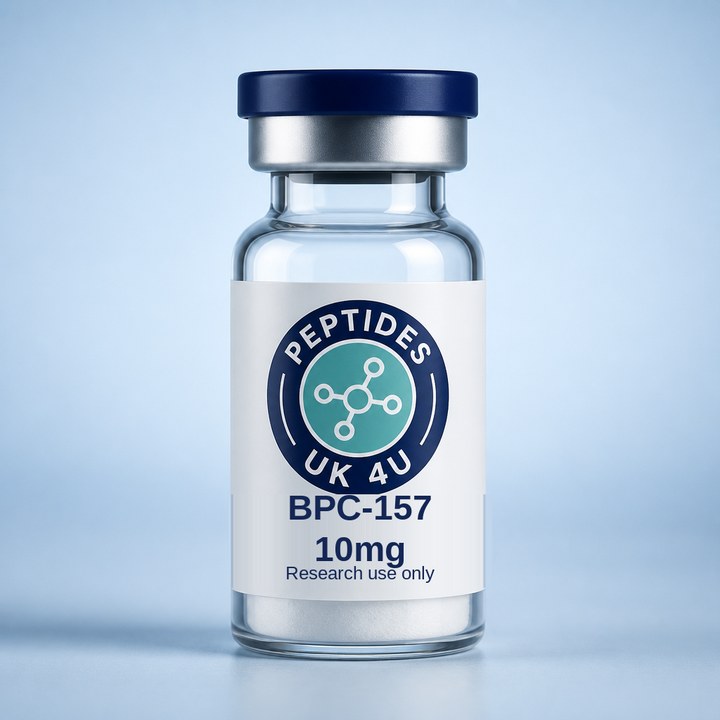
BPC-157 is a synthetic peptide derived from a gastric protein sequence, currently being studied for its tissue-healing and protective properties. Dosage protocols typically involve subcutaneous injections ranging from 200 to 600 mcg daily, with the peptide reconstituted in bacteriostatic water for accurate measurement. This information is for educational research purposes.
- Synthetic peptide derived from gastric protein.
- Investigated for accelerating wound and tissue repair.
- Administered via once-daily subcutaneous injection.
- Reconstituted with 3.0 mL bacteriostatic water for easy dosing.
Reconstitution
Vial strength
10 mg
Bacteriostatic water
3 mL
Concentration
3.33 mg/mL
1 unit = 0.01 mL ≈ 33.3 mcg
- 1Draw 3.0 mL bacteriostatic water with a sterile syringe.
- 2Inject slowly down the inside wall of the BPC-157 vial, avoiding direct contact with the peptide powder.
- 3Gently swirl or roll the vial until the peptide completely dissolves; do not shake vigorously.
- 4Label the reconstituted vial with the date and store it in the refrigerator at 2-8 °C (35.6-46.4 °F), protected from light.
Dosing schedule
| Phase | Dose | On a U-100 syringe |
|---|---|---|
| Weeks 1–2 | 200 mcg | 6 units (0.06 mL) |
| Weeks 3–4 | 400 mcg | 12 units (0.12 mL) |
| Weeks 5–8+ | 600 mcg | 18 units (0.18 mL) |
Protocol detail
| Start | Initiate with 200 mcg daily; increase the dose by approximately 200 mcg every two weeks, as tolerated. |
|---|---|
| Target | Aim to reach a daily dose of 400–600 mcg by Weeks 5–8 or later. |
| Frequency | Administer once per day via subcutaneous injection. |
| Cycle Length | Maintain for 8–12 weeks, with an optional extension up to 16 weeks based on individual goals. |
| Timing | Injections can be performed at any consistent time of day; ensure to rotate injection sites regularly. |
Overview at a glance
| Goal | Support tissue-healing and recovery processes based on preclinical evidence. |
|---|---|
| Schedule | Daily subcutaneous injections for 8–12 weeks; optionally extend to 16 weeks. |
| Dose Range | 200–600 mcg daily with gradual titration. |
| Reconstitution | 3.0 mL bacteriostatic water per 10 mg vial (~3.33 mg/mL) for accurate unit measurements. |
| Storage | Lyophilized frozen; reconstituted refrigerated; avoid repeated freeze–thaw. |
How it works
BPC-157 is a synthetically produced peptide that mirrors a segment of a protein found in human gastric juice. Preclinical investigations indicate its role in regulating nitric oxide pathways and enhancing the expression of growth factors, which promotes the formation of new blood vessels and collagen deposition in injured tissues. Animal studies have reported accelerated healing of various injuries, including those to the gut, tendons, ligaments, and muscles. While a Phase I oral safety trial has concluded and some small human case reports show promise, extensive controlled human efficacy data are still in progress.
Reported effects
- Supports tissue repair in gastrointestinal, tendon, muscle, and skin injury models (animal studies).
- Exhibits anti-inflammatory and protective effects in preclinical settings.
- Phase I safety studies show good tolerability without severe adverse events.
Reported side effects
- Occasional mild injection-site reactions (e.g., redness, itching).
- Long-term human safety and efficacy are still being investigated.
Storage
Lyophilised (unmixed)
Store at -20 °C (-4 °F) in dry, dark conditions; minimize moisture exposure.
After reconstitution
Refrigerate at 2-8 °C (35.6-46.4 °F); avoid freeze-thaw cycles. Allow vials to reach room temperature before opening.
Supplies
| Peptide vials | BPC-157, 10 mg each (e.g., 3 vials for an 8-week cycle, 5 vials for 12 weeks, 6 vials for 16 weeks) |
|---|---|
| Insulin Syringes | U-100 (e.g., 56 for 8 weeks, 84 for 12 weeks, 112 for 16 weeks) |
| Bacteriostatic Water | 10 mL bottles (~3.0 mL per vial for reconstitution) |
| Alcohol Swabs | Two per day (one for vial, one for injection site); recommend 2-3 x 100-count boxes per cycle. |
Important notes
- Always use a new, sterile insulin syringe for each injection and dispose of it properly in a sharps container.
- Rotate injection sites frequently (abdomen, thighs, upper arms) to prevent local irritation and lipohypertrophy.
- Inject slowly and wait a few seconds before withdrawing the needle to ensure full delivery.
- Maintain a consistent record of your daily dose and injection site rotation.
- Human data for BPC-157 are still preliminary; consult with qualified healthcare providers for clinical decisions.
Frequently asked questions
What is the primary function of BPC-157?
BPC-157 is a synthetic peptide primarily researched for its potential to promote tissue repair and offer protective effects across various body systems, including the gut, tendons, and muscles.
How should I store BPC-157 before and after reconstitution?
Before reconstitution, store lyophilized BPC-157 frozen at -20 °C (-4 °F). Once reconstituted with bacteriostatic water, it should be refrigerated at 2-8 °C (35.6-46.4 °F) and protected from light. Avoid freezing and thawing the reconstituted solution.
Can I adjust the dose of BPC-157?
Yes, typical protocols suggest starting at 200 mcg daily and gradually increasing the dose by about 200 mcg every two weeks, as tolerated, up to a maximum of 600 mcg daily. This titration allows for individual response assessment.
What kind of syringe do I need for BPC-157 injections?
A U-100 insulin syringe is recommended for BPC-157 subcutaneous injections. This type of syringe allows for precise measurement of the small volumes required for peptide dosing.
Educational reference only. These figures summarise how BPC-157 is commonly described in research literature and supplier documentation. They are not a prescription, not medical advice, and not a recommendation to self-administer anything.
Related protocols
BPC-157 (5 mg Vial)
A synthetic gastric peptide investigated for tissue repair and healing.
BPC-157 + TB-500 (10 mg Blend)
Advanced blend for tissue repair, wound healing, and recovery.
KLOW (80 mg Blend)
Multi-peptide blend for enhanced healing, regeneration, and anti-inflammatory support.
TB-500 + BPC-157 Stack (5 mg Vials)
Synergistic stack for enhanced tissue repair and regeneration.