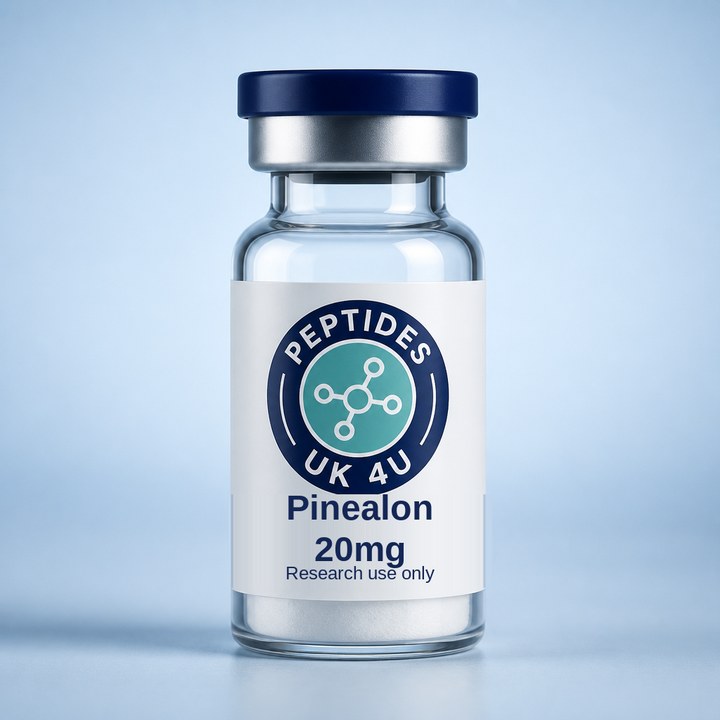
Pinealon is a synthetic tripeptide bioregulator designed to protect neurons from oxidative stress, support cognitive function, and modulate gene expression in brain tissue. This guided protocol outlines a daily subcutaneous dosing regimen ranging from 1.0 to 2.0 mg over 10-20 days, detailing reconstitution and administration for optimal effect.
- Synthetic tripeptide bioregulator Glu-Asp-Arg.
- Dosed subcutaneously at 1.0-2.0 mg daily.
- Cycle length typically 10-20 days, extendable to 28 days.
- Supports neuroprotection and cognitive function.
- Reconstitute 20 mg vial with 3.0 mL bacteriostatic water for 6.67 mg/mL.
Reconstitution
Vial strength
20 mg
Bacteriostatic water
3 mL
Concentration
6.67 mg/mL
1 unit = 0.01 mL = 66.7 mcg
- 1Draw 3.0 mL bacteriostatic water with a sterile syringe.
- 2Inject water slowly down the side of the vial, avoiding foaming.
- 3Gently swirl or roll the vial until the peptide is fully dissolved (do not shake).
- 4Label the reconstituted vial with date and concentration, then refrigerate at 2-8 °C, protected from light.
Dosing schedule
| Phase | Dose | On a U-100 syringe |
|---|---|---|
| Days 1-5 | 1.0 mg (1,000 mcg) | 15 units (0.15 mL) |
| Days 6-14 | 1.5 mg (1,500 mcg) | 22.5 units (0.225 mL) |
| Days 15-20 | 2.0 mg (2,000 mcg) | 30 units (0.30 mL) |
Protocol detail
| Start | 1.0 mg daily for Days 1-5 to assess tolerance. |
|---|---|
| Increase | 1.5 mg daily for Days 6-14. |
| Target | 2.0 mg daily for Days 15-20 (or up to Day 28 if extending cycle). |
| Frequency | Once per day (subcutaneous), preferably morning or early afternoon. |
| Cycle Length | Standard 10-20 days; repeat cycles may be administered every 2-3 months. |
| Timing | Maintain consistent daily timing and rotate injection sites. |
Overview at a glance
| Goal | Support neuroprotection, cognitive function, and cellular resilience in brain tissue through peptide bioregulation. |
|---|---|
| Schedule | Daily subcutaneous injections for 10-20 days (extendable to 28 days). |
| Dose Range | 1.0-2.0 mg daily with gradual titration. |
| Reconstitution | 3.0 mL per 20 mg vial (~6.67 mg/mL) for accurate unit measurements. |
| Storage | Lyophilized frozen; reconstituted refrigerated; avoid repeated freeze-thaw. |
How it works
Pinealon has been researched for its potential to impact gene expression and protein synthesis involved in neurodegeneration. Studies indicate it may reduce reactive oxygen species and necrotic cell death in neurons, while promoting cell proliferation. Preclinical data shows neuroprotective effects against oxidative stress and ischemic injury, along with improvements in memory and learning. Human clinical trials have also reported enhanced memory, attention, and cognitive function in individuals with certain brain disorders, suggesting a regulatory role in protecting brain tissue and supporting cognitive processes.
Reported effects
- Neuroprotective effects by reducing oxidative stress and preserving neuronal viability
- Improvements in memory, learning capacity, and overall cognitive function
- Potential modulation of caspase-3 activity, which may reduce apoptosis in neurons
Reported side effects
- Generally well tolerated
- Occasional mild injection-site reactions (e.g., redness, itching)
Storage
Lyophilised (unmixed)
Store at -20 °C (-4 °F) in dry, dark conditions; minimize moisture exposure.
After reconstitution
Refrigerate at 2-8 °C (35.6-46.4 °F); avoid freeze-thaw cycles. Allow vials to reach room temperature before opening to reduce condensation.
Supplies
| Peptide vials (Pinealon, 20 mg each) | 1 vial for a 10-day cycle; 2 vials for a 20-day cycle; 3 vials for a 28-day cycle |
|---|---|
| Insulin Syringes (U-100) | 1 syringe per day (e.g., 10 for 10-day cycle, 20 for 20-day cycle) |
| Bacteriostatic Water (10 mL bottles) | Use 3.0 mL per vial for reconstitution (e.g., one 10 mL bottle for up to 3 vials) |
| Alcohol Swabs | Two per day (one for vial, one for injection site); consider a 100-count box for longer cycles |
Important notes
- Always use new, sterile insulin syringes and dispose of them in a sharps container.
- Rotate injection sites (abdomen, thighs, upper arms) to minimize local irritation.
- Inject slowly and wait a few seconds before removing the needle.
- Keep a record of daily doses and injection site rotation.
- Effects are typically observed after 10-14 days of consistent use.
Frequently asked questions
How long does a cycle of Pinealon typically last?
A standard cycle of Pinealon lasts between 10 to 20 days, though it can be extended up to 28 days. Cycles can be repeated every 2-3 months as needed.
What is the recommended injection technique for Pinealon?
Pinealon is administered via subcutaneous injection. Clean the vial stopper and skin with alcohol, pinch a skinfold, and insert the needle at a 45-90 degree angle. Inject slowly and rotate sites regularly (abdomen, thighs, upper arms).
What should I do if I experience an injection site reaction?
Mild injection site reactions, such as redness or itching, can occur. Ensure you are rotating your injection sites consistently to help minimize irritation. If reactions are severe or persistent, consult a healthcare professional.
How quickly can I expect to see effects from Pinealon?
Based on research, the beneficial effects of Pinealon typically become noticeable after 10-14 days of consistent daily administration.
Educational reference only. These figures summarise how Pinealon is commonly described in research literature and supplier documentation. They are not a prescription, not medical advice, and not a recommendation to self-administer anything.
Related protocols
Adamax (10 mg Vial)
Advanced nootropic for enhanced cognition, neuroprotection, and neuroplasticity.
Cerebrolysin (60 mg Vial)
Porcine-derived peptide supporting brain health and neuronal function.
SS-31 (30 mg Vial)
Mitochondrial-targeted peptide enhancing energy production and reducing oxidative stress.
Ara-290 (16 mg Vial)
Targets innate repair receptor for anti-inflammatory and tissue-protective effects.