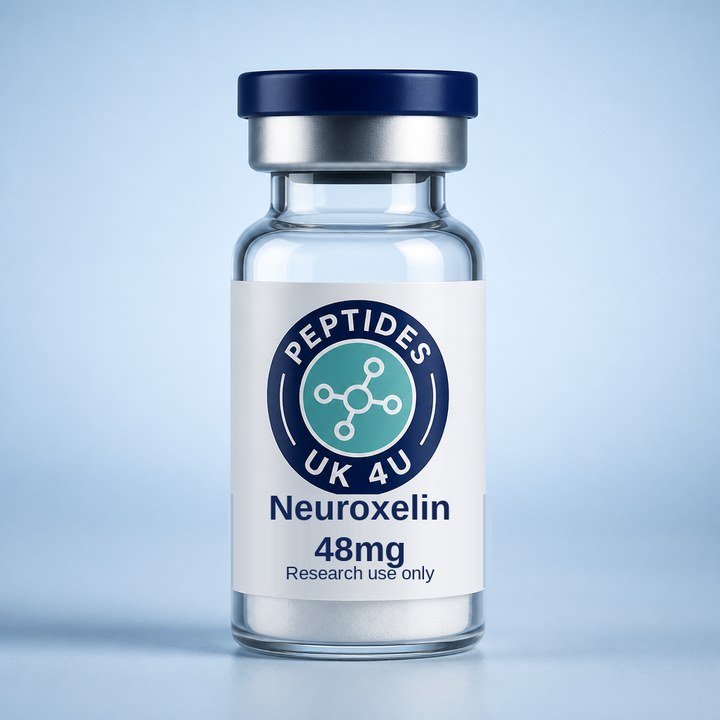
Neuroxelin is a synthetic neuroprotective peptide blend used in educational protocols to support cognitive recovery and neuroprotection after brain injury or stroke. It is typically administered subcutaneously once daily, with common dosages ranging from 500 mcg to 750 mcg. Reconstitution of a 48 mg vial with 3.0 mL of bacteriostatic water yields a concentration of 16 mg/mL.
- Synthetic neuroprotective peptide blend.
- Aids in cognitive recovery and neuroprotection after brain injury/stroke.
- Standard dose is 500 mcg daily, administered subcutaneously.
- Reconstitute 48 mg vial with 3.0 mL bacteriostatic water for a 16 mg/mL concentration.
- Cycle length is typically 8-12 weeks.
Reconstitution
Vial strength
48 mg
Bacteriostatic water
3 mL
Concentration
16 mg/mL
1 unit = 0.01 mL = 160 mcg (at 16 mg/mL concentration)
- 1Allow lyophilized vial to reach room temperature before opening.
- 2Draw 3.0 mL of bacteriostatic water using a sterile syringe.
- 3Inject water slowly down the interior wall of the vial, avoiding the creation of foam.
- 4Gently swirl or roll the vial until the peptide is completely dissolved; do not shake.
- 5Label the reconstituted vial with the concentration (16 mg/mL) and the date of reconstitution, then refrigerate at 2–8 °C, ensuring it is protected from light.
Dosing schedule
| Phase | Dose | On a U-100 syringe |
|---|---|---|
| Weeks 1-4 | 500 mcg | 3 units (0.03 mL) |
| Weeks 5-8 | 750 mcg | 4.7 units (0.047 mL) |
Protocol detail
| Start | Initiate with 500 mcg daily for the first 4 weeks, carefully assessing tolerance. |
|---|---|
| Adjust | If well-tolerated and more aggressive support is desired, increase the daily dose to 750–1000 mcg starting from Week 5. |
| Frequency | Administer once per day via subcutaneous injection, preferably in the morning. |
| Cycle Length | The typical cycle extends for 8–12 weeks; re-evaluate every 8 weeks for possible extension of the protocol. |
| Timing | Inject at the same time each morning and remember to rotate injection sites regularly. |
Overview at a glance
| Goal | Support neuroprotection, reduce neuroinflammation, and enhance cognitive recovery following brain injury. |
|---|---|
| Schedule | Daily subcutaneous injections for 8–12 weeks, with potential for extension if desired. |
| Dose Range | 250–1000 mcg daily; typical dose is 500 mcg. |
| Reconstitution | 3.0 mL per 48 mg vial (16 mg/mL) for practical unit measurements. |
| Storage | Lyophilized frozen at -20 °C; reconstituted refrigerated at 2–8 °C; use within 4 weeks of reconstitution. |
How it works
Neuroxelin targets the injury cascade in the brain through several mechanisms. It may reduce excitotoxic neuron death by interfering with NMDA receptor signaling, similar to nerinetide. It also has the potential to decrease neuroinflammation by moderating microglial activation and cytokine release, mirroring actions seen with apoE-mimetic peptides. Furthermore, this peptide blend could provide neurotrophic benefits, supporting synaptic repair, neurogenesis, and neuronal survival, particularly after acute brain injuries, promoting vascular repair. These combined effects aim to improve neurological outcomes.
Reported effects
- Improved neurological outcomes and functional recovery after stroke or brain injury.
- Enhancement in cognitive test scores and information processing speed.
- Reduced neuronal death and decreased microglial activation in animal studies.
- Low toxicity profiles observed in related peptides.
- Potential to reduce neuroinflammation.
Reported side effects
- Possible mild injection-site reactions (redness, irritation).
Storage
Lyophilised (unmixed)
Freeze at -20 °C (-4 °F) in dry, dark conditions; stable for months to years.
After reconstitution
Refrigerate at 2-8 °C (35.6-46.4 °F); use within 4 weeks; avoid freeze-thaw cycles.
Supplies
| Peptide vials | 1 vial for 8-12 weeks at 500 mcg/day; 2 vials for 8 weeks at 1000 mcg/day. |
|---|---|
| Insulin Syringes | U-100, 30- or 50-unit recommended; 7 per week, total of 56-84 for 8-12 weeks. |
| Bacteriostatic Water | 10 mL bottles; 3.0 mL per vial reconstitution. |
| Alcohol Swabs | 2 per day (one for vial, one for injection site); 112-168 for 8-12 weeks (2 x 100-count boxes). |
Important notes
- Always use a new sterile insulin syringe for each injection and dispose of it in a sharps container.
- Rotate injection sites (e.g., abdomen, thighs, upper arms) to prevent skin irritation or tissue changes.
- Inject slowly and pause a few seconds before removing the needle.
- Maintain detailed records of daily dose, time, and injection site for consistent adherence.
- For precise measurement of smaller doses (6 units or less), opt for 30- or 50-unit insulin syringes.
Frequently asked questions
What is Neuroxelin primarily used for?
Neuroxelin is primarily used in research protocols to support neuroprotection and enhance cognitive recovery, particularly after events like brain injury or stroke.
How should Neuroxelin be reconstituted?
For a 48 mg vial, reconstitute by adding 3.0 mL of bacteriostatic water. Inject the water slowly down the vial wall and gently swirl until the peptide is fully dissolved to achieve a concentration of 16 mg/mL.
What is the typical dosing schedule for Neuroxelin?
A common protocol involves injecting 500 mcg subcutaneously once daily for 8 to 12 weeks. Doses can sometimes be adjusted between 250 mcg and 1000 mcg daily based on the specific research aims or individual tolerability.
How should Neuroxelin be stored after reconstitution?
After reconstitution, Neuroxelin should be refrigerated at 2-8 °C (35.6-46.4 °F) and used within 4 weeks. It is important to protect it from light and avoid any freeze-thaw cycles.
Educational reference only. These figures summarise how Neuroxelin is commonly described in research literature and supplier documentation. They are not a prescription, not medical advice, and not a recommendation to self-administer anything.
Related protocols
Adamax (10 mg Vial)
Advanced nootropic for enhanced cognition, neuroprotection, and neuroplasticity.
Ara-290 (16 mg Vial)
Targets innate repair receptor for anti-inflammatory and tissue-protective effects.
Cerebrolysin (60 mg Vial)
Porcine-derived peptide supporting brain health and neuronal function.
Cortagen (20 mg Vial)
Synthetic tetrapeptide supporting neural regeneration and cognitive function.