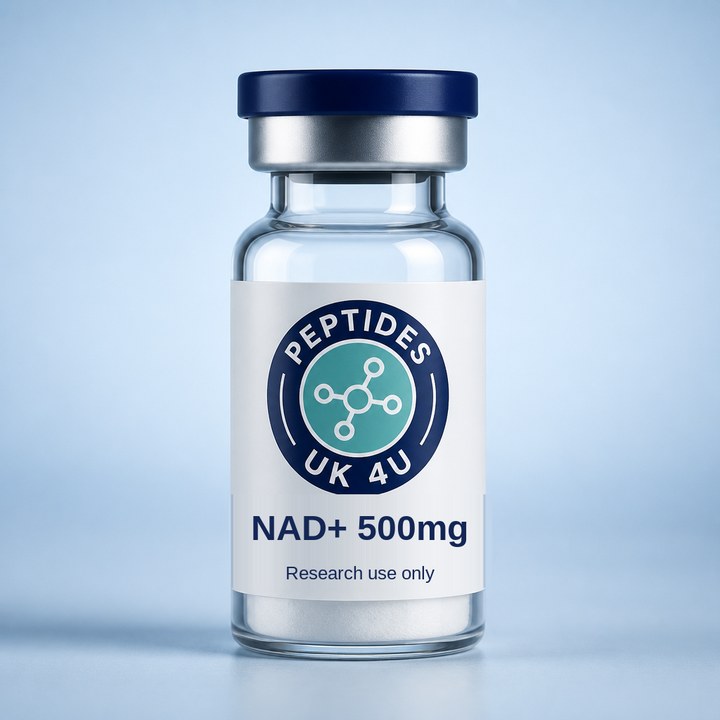
NAD+ is a vital coenzyme essential for cellular energy production, DNA repair, and mitochondrial function. This protocol outlines a subcutaneous dosing strategy, typically ranging from 50 to 100 mg daily, to replenish cellular NAD+ levels. It is administered via subcutaneous injection with a gradual dose titration over several weeks.
- Crucial for cellular energy and DNA repair.
- Typical doses are 50-100 mg daily, subcutaneously.
- Gradual dose titration is recommended to improve tolerability.
- Reconstitute 500 mg vial with 3.0 mL of bacteriostatic water.
- Use within 14 days after reconstitution and refrigerate.
Reconstitution
Vial strength
500 mg
Bacteriostatic water
3 mL
Concentration
166.7 mg/mL
1 unit = 0.01 mL = 1.67 mg
- 1Allow the lyophilized vial to reach room temperature.
- 2Draw 3.0 mL of bacteriostatic water (0.9% benzyl alcohol) with a sterile syringe.
- 3Inject water slowly down the vial wall to prevent foaming; do not aim directly at the powder.
- 4Gently swirl or roll the vial until the powder is fully dissolved (do not shake vigorously).
- 5The solution should be clear and colorless; discard if discoloration or precipitate is present.
- 6Label the vial with the reconstitution date and refrigerate at 2-8 °C (35.6-46.4 °F), protected from light.
- 7Use the reconstituted solution within 14 days and inspect it for clarity before each use.
Dosing schedule
| Phase | Dose | On a U-100 syringe |
|---|---|---|
| Week 1 | 50 mg | 30 units (0.30 mL) |
| Week 2 | 75 mg | 45 units (0.45 mL) |
| Weeks 3-16 | 100 mg | 60 units (0.60 mL) |
Protocol detail
| Start | Begin with 50 mg daily for Week 1 to evaluate individual tolerance. |
|---|---|
| Escalation | Increase the dose to 75 mg daily in Week 2, and then to 100 mg daily by Week 3, provided previous doses were well-tolerated. |
| Maintenance | Maintain at 100 mg daily for Weeks 3-16, adjusting as needed based on personal response and tolerability. |
| Frequency | Administer once per day via subcutaneous injection. |
| Timing | Can be administered at any consistent time, though some individuals prefer morning injections. |
| Site Rotation | Systematically rotate injection sites (e.g., abdomen, thighs, upper arms) to prevent tissue irritation or buildup. |
Overview at a glance
| Goal | Support cellular energy metabolism, DNA repair, and mitochondrial function by supplementing NAD+. |
|---|---|
| Schedule | Daily subcutaneous injections for 8-16 weeks with gradual dose increases. |
| Dose Range | 50-100 mg daily; begin low (50 mg) and gradually increase by approximately 25 mg weekly based on tolerance. |
| Reconstitution | Add 3.0 mL of bacteriostatic water to a 500 mg vial (166.7 mg/mL concentration) for accurate unit measurements. |
| Storage | Lyophilized powder frozen at -20 °C (-4 °F); reconstituted solution refrigerated at 2-8 °C (35.6-46.4 °F) for up to 14 days, protected from light. |
How it works
NAD+ is a fundamental coenzyme involved in key cellular processes like energy metabolism, DNA repair, and mitochondrial health. Cellular NAD+ levels naturally decline with age and stress, impairing these functions. While high-dose intravenous NAD+ is used clinically, lower-dose subcutaneous injections offer a practical way to support NAD+ levels. By replenishing this coenzyme, NAD+ therapy aims to enhance cellular function, potentially improving energy, repair mechanisms, and overall cellular resilience, thereby mitigating effects of aging and metabolic stress. This protocol allows for controlled, at-home administration with gradual dose adjustments.
Reported effects
- Supports cellular energy production
- Enhances mitochondrial function
- Aids in DNA repair pathways
- May improve cognitive support and metabolic health
- Reported benefits in substance use disorder treatment (high-dose IV)
Reported side effects
- Insomnia, anxiety, or fatigue (if dosed too high/fast)
- Mild injection-site reactions (redness, itching, soreness)
- Transient headache or flushing (dose-dependent)
- Potential for metabolic byproduct accumulation at very high doses
Storage
Lyophilised (unmixed)
Store at -20 °C (-4 °F) or below (ideally -80 °C for multi-year storage) in a dry, dark environment, minimizing moisture exposure.
After reconstitution
Refrigerate at 2-8 °C (35.6-46.4 °F) for up to 14 days, protected from light; avoid freeze-thaw cycles.
Supplies
| Peptide vials | Approximately 11-22 vials (500 mg each) for 8-16 weeks. |
|---|---|
| Insulin Syringes (U-100, 1 mL) | Approximately 56-112 syringes for 8-16 weeks. |
| Bacteriostatic Water | Approximately 4-7 x 10 mL bottles for 8-16 weeks. |
| Alcohol Swabs | Approximately 2-3 x 100-count boxes for 8-16 weeks. |
| Sharps Container | For safe disposal of used needles. |
Important notes
- Always use new, sterile insulin syringes and proper sharps disposal.
- Rotate injection sites regularly to avoid soreness and lipohypertrophy.
- Clean vial stopper and injection site with alcohol, allowing skin to air-dry.
- Inject slowly over 5-10 seconds and track doses and injection sites.
- Start with the lowest dose (50 mg) to assess individual tolerance.
Frequently asked questions
What is NAD+ and why is it important?
NAD+ (Nicotinamide Adenine Dinucleotide) is a crucial coenzyme found in all living cells. It's vital for converting food into energy, repairing DNA, and maintaining healthy mitochondrial function. Its levels naturally decline with age, which can impact cellular health.
How should I reconstitute my 500 mg NAD+ vial?
To reconstitute a 500 mg NAD+ vial, slowly add 3.0 mL of bacteriostatic water down the side of the vial. Gently swirl or roll the vial until the powder completely dissolves, being careful not to shake vigorously. The resulting solution will have a concentration of 166.7 mg/mL.
What is the recommended dosing schedule for NAD+?
The suggested protocol starts with 50 mg daily via subcutaneous injection for Week 1. If well-tolerated, increase to 75 mg daily in Week 2, and then to 100 mg daily for Weeks 3-16. This gradual titration helps assess individual tolerance and minimize potential side effects.
What are the common side effects of NAD+ injections?
Some potential side effects, particularly if doses are increased too quickly, include insomnia, anxiety, or fatigue. Mild reactions at the injection site like redness or soreness can also occur. Rotating injection sites and slower titration can help manage these issues.
Educational reference only. These figures summarise how NAD+ is commonly described in research literature and supplier documentation, including the NAD+ listing at peptidesuk4u.co.uk. They are not a prescription, not medical advice, and not a recommendation to self-administer anything.
Related protocols
NAD+ (1000 mg Vial)
Cellular energy, DNA repair, and mitochondrial function support.
FOXO4-DRI (10 mg Vial)
Targets senescent cells for anti-aging and tissue rejuvenation.
Livagen (20 mg Vial)
Synthetic tetrapeptide that may support cellular health and regeneration in aging tissues.
CJC-1295 DAC (2 mg Vial)
Long-acting GHRH analog for sustained growth hormone release.