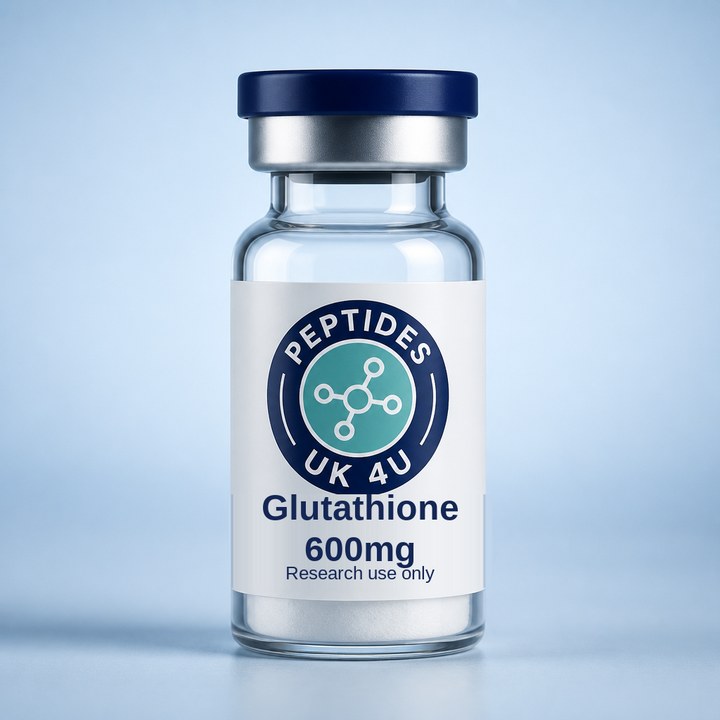
Glutathione, often called the body's master antioxidant, is a tripeptide crucial for detoxification and combating oxidative stress. This protocol outlines a subcutaneous injection approach with gradual dosing to support cellular health and immune function.
- Glutathione is the body's most abundant intracellular antioxidant.
- Dosing involves gradual titration from 100 mg to 200 mg daily.
- Reconstitute with 2.0 mL bacteriostatic water for 300 mg/mL concentration.
- Injected subcutaneously, either daily or every other day.
- Essential for cellular detoxification and immune system support.
Reconstitution
Vial strength
600 mg
Bacteriostatic water
2 mL
Concentration
300 mg/mL
1 unit = 0.01 mL = 3 mg
- 1Draw 2.0 mL bacteriostatic water with a sterile syringe.
- 2Inject slowly down the vial wall; avoid foaming.
- 3Gently swirl or roll until dissolved (do not shake).
- 4Label the vial and refrigerate at 2-8 °C (35.6-46.4 °F), protected from light.
Dosing schedule
| Phase | Dose | On a U-100 syringe |
|---|---|---|
| Weeks 1-2 | 100 mg | 33 units (0.33 mL) |
| Weeks 3-4 | 150 mg | 50 units (0.50 mL) |
| Weeks 5-8 | 200 mg | 67 units (0.67 mL) |
Protocol detail
| Start | 100 mg daily; increase by approximately 50 mg every 1-2 weeks as tolerated. |
|---|---|
| Target | 150-200 mg daily by Weeks 3-8. |
| Frequency | Once per day or every other day for maintenance. |
| Cycle Length | 4-8 weeks; consider cycling off for 2-4 weeks between protocols. |
Overview at a glance
| Goal | Support antioxidant defense, cellular detoxification, and immune function. |
|---|---|
| Schedule | Daily or every-other-day subcutaneous injections for 4-8 weeks. |
| Dose Range | 100-200 mg daily with gradual titration. |
| Reconstitution | 2.0 mL per 600 mg vial (300 mg/mL) for accurate unit measurements. |
| Storage | Lyophilized frozen; reconstituted refrigerated. Avoid repeated freeze-thaw. |
How it works
Glutathione (GSH) is a crucial tripeptide, omnipresent in cells, acting as the body's primary intracellular antioxidant. It neutralizes harmful reactive oxygen species and supports Phase II detoxification pathways, facilitating the removal of xenobiotics and heavy metals. In its reduced form, GSH donates electrons to combat free radicals and is then regenerated by glutathione reductase. Optimal GSH levels are vital for liver function, immune cell activity, mitochondrial protection, and maintaining overall cellular stability and health, as supported by research.
Reported effects
- Reduces oxidative stress and maintains cellular redox balance
- Enhances liver function and supports detoxification pathways
- Modulates immune response, supporting natural killer cells and T-cell function
- May improve skin health and melanin index
Reported side effects
- Mild injection-site reactions (redness, itching)
- Occasional gastrointestinal discomfort with high doses
Storage
Lyophilised (unmixed)
Store at -20 °C (-4 °F) in dry, dark conditions; minimize moisture exposure.
After reconstitution
Refrigerate at 2–8 °C (35.6–46.4 °F), protected from light. Use within 2-3 weeks for optimal potency. Avoid freeze-thaw cycles.
Supplies
| Peptide vials | Approximately 3 vials for 4 weeks (100-150 mg/day) or 7 vials for 8 weeks (150-200 mg/day). |
|---|---|
| Insulin Syringes (U-100) | 7 per week; 28 for 4 weeks, 56 for 8 weeks. |
| Bacteriostatic Water | Approximately one 10 mL bottle for 4 weeks, or two for 8 weeks. |
| Alcohol Swabs | 14 per week (2 per day); 56 for 4 weeks or 112 for 8 weeks. |
Important notes
- Always use new, sterile insulin syringes and dispose of them in a sharps container.
- Rotate injection sites (abdomen, thighs, upper arms) to prevent local irritation.
- Inject slowly and steadily; wait a few seconds before withdrawing the needle.
- Document daily doses and site rotation for consistency and safety.
Frequently asked questions
How accurate is the dosing with a U-100 insulin syringe?
With a reconstitution of 2.0 mL bacteriostatic water in a 600 mg vial, the concentration is 300 mg/mL. This means 1 unit (0.01 mL) on a U-100 syringe precisely delivers 3 mg of Glutathione, allowing for very accurate dosing.
Can I split the daily dose of Glutathione?
Yes, while the protocol suggests once-daily injections, some protocols utilize every-other-day dosing for maintenance, or you can split doses based on your goals if advised by a healthcare professional.
How long can reconstituted Glutathione be stored?
Once reconstituted, Glutathione should be refrigerated at 2-8 °C (35.6-46.4 °F) and used within 2-3 weeks for optimal potency. It's best to protect it from light and avoid freeze-thaw cycles.
What can I do to enhance the effects of Glutathione?
Incorporating sulfur-rich foods (like cruciferous vegetables, garlic) into your diet can support your body's natural Glutathione synthesis. Additionally, minimizing alcohol, reducing exposure to environmental toxins, prioritizing sleep, and considering complementary nutrients like Vitamin C and selenium can further optimize its benefits.
Educational reference only. These figures summarise how Glutathione is commonly described in research literature and supplier documentation, including the Glutathione listing at peptidesuk4u.co.uk. They are not a prescription, not medical advice, and not a recommendation to self-administer anything.
Related protocols
Glutathione (1500 mg Vial)
Master antioxidant supporting detoxification, cellular health, and immune function.
FOXO4-DRI (10 mg Vial)
Targets senescent cells for anti-aging and tissue rejuvenation.
GHK-Cu (100 mg Vial)
Copper peptide supporting collagen, tissue repair, and antioxidant benefits.
GHK-Cu (50 mg Vial)
Naturally occurring copper peptide for tissue remodeling and skin repair.