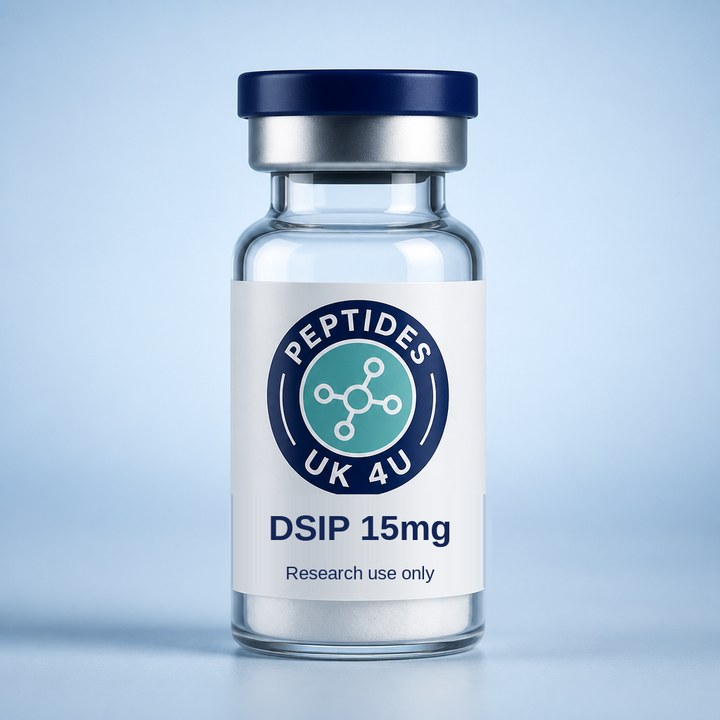
DSIP is a nonapeptide designed to promote deep, restorative sleep. Dosed subcutaneously, typically in the evening before bed, it can help normalize sleep architecture and assist with stress response. The dosing schedule gradually increases over several weeks to find the optimal therapeutic effect.
- Subcutaneous injection, once daily in the evening.
- Starts at 100 mcg, gradually increasing to 300 mcg.
- 15 mg vial reconstituted with 3.0 mL bacteriostatic water yields ~5 mg/mL.
- Helps promote deep delta-wave sleep without next-day grogginess.
- Cycle length is typically 8-12 weeks.
Reconstitution
Vial strength
15 mg
Bacteriostatic water
3 mL
Concentration
5 mg/mL
1 unit = 0.01 mL = 50 mcg (U-100 syringe)
- 1Using a sterile syringe, draw up 3.0 mL of bacteriostatic water.
- 2Carefully inject the water into the DSIP vial, aiming down the side of the glass to prevent foaming.
- 3Gently swirl or roll the vial until the peptide powder is completely dissolved; do not shake.
- 4Label the reconstituted vial with the date and store it in the refrigerator at 2-8 °C, protecting it from light.
Dosing schedule
| Phase | Dose | On a U-100 syringe |
|---|---|---|
| Week 1 | 100 mcg | 2 units (0.02 mL) |
| Week 2 | 150 mcg | 3 units (0.03 mL) |
| Week 3 | 200 mcg | 4 units (0.04 mL) |
| Weeks 4–8 | 250–300 mcg | 6 units (0.06 mL) |
Protocol detail
| Start | Begin with 100 mcg nightly, increasing the dose by roughly 50 mcg every 1–2 weeks as tolerated. |
|---|---|
| Target | Aim to reach 250–300 mcg nightly by Weeks 4–8 of the protocol. |
| Frequency | Inject once daily subcutaneously, 30–60 minutes before bedtime. |
| Cycle Length | Typical duration is 8–12 weeks; consider taking a break after completing the cycle. |
Overview at a glance
| Goal | Support improved sleep quality, enhance delta-wave sleep, and help modulate stress over time. |
|---|---|
| Schedule | Daily subcutaneous injections every evening for 8–12 weeks. |
| Dose Range | 100–300 mcg daily, with a gradual increase. |
| Reconstitution | 3.0 mL bacteriostatic water per 15 mg vial results in approximately 5 mg/mL for precise unit measurements. |
How it works
DSIP (Delta Sleep-Inducing Peptide) acts as a neuromodulator that significantly influences the sleep-wake cycle and stress response. It promotes the initiation and maintenance of deep, non-REM sleep by increasing delta-wave activity in brain recordings. DSIP readily crosses the blood-brain barrier to exert its central effects, potentially by enhancing inhibitory neuronal function or modulating sleep-regulating brain regions. Furthermore, it can reduce the release of stress hormones, indicating an impact on the hypothalamic-pituitary-adrenal axis. Unlike traditional sedatives, DSIP aims to normalize sleep architecture without causing next-day grogginess.
Reported effects
- Improved sleep quality
- Increased slow-wave (delta) sleep duration
- Normalization of disrupted sleep patterns
- Stress reduction and mood support
- No next-day grogginess
Reported side effects
- Occasional mild headache
- Occasional mild nausea
- Mild injection-site reactions (redness, itching)
Storage
Lyophilised (unmixed)
Store dry at -20 °C (-4 °F), protected from light and moisture.
After reconstitution
Refrigerate at 2-8 °C (35.6-46.4 °F); avoid freeze-thaw cycles.
Supplies
| Peptide vials | 10 mg DSIP vials: 1 vial for an 8-week protocol, 2 vials for a 12-week protocol. |
|---|---|
| Insulin Syringes | 30- or 50-unit syringes recommended for small volumes; ~56 for 8 weeks, ~84 for 12 weeks. |
| Bacteriostatic Water | One 10 mL bottle is sufficient for up to two 15 mg vials (3.0 mL per vial). |
| Alcohol Swabs | Approximately 112 for an 8-week protocol, 168 for a 12-week protocol (2 per day). |
Important notes
- Always use new, sterile insulin syringes and dispose of them safely in a sharps container.
- Rotate injection sites regularly (e.g., abdomen, thighs, upper arms) to prevent irritation.
- Inject slowly and steadily; wait a few seconds before removing the needle.
- Maintain consistent daily dose and site rotation records.
- Avoid concurrent use of other sedatives to accurately assess DSIP's effects.
Frequently asked questions
How quickly can I expect to see results from DSIP?
The DSIP protocol involves a gradual increase in dose over several weeks. While some individuals may notice improvements sooner, the full benefits related to deep sleep and stress modulation typically become more apparent after consistent use over several weeks, following the titration schedule.
Why is it important to rotate injection sites?
Rotating injection sites (e.g., abdomen, thighs, upper arms) is crucial to prevent localized skin irritation, tissue damage, or the formation of lumps (lipohypertrophy). This practice helps ensure consistent absorption of the peptide and maintains skin health.
Can I use DSIP with other sleep aids or medications?
It's generally recommended to avoid using other sedatives or sleep medications while on a DSIP protocol. This helps to clearly evaluate the specific effects of DSIP and prevents potential interactions. Always consult a healthcare professional before combining any peptides with other medications or supplements.
What should I do if I miss a dose?
If you miss a dose of DSIP, simply administer your next scheduled dose at your usual time the following evening. Do not double your dose to compensate for the missed one. Consistency is key for optimal results.
Educational reference only. These figures summarise how DSIP is commonly described in research literature and supplier documentation, including the DSIP listing at peptidesuk4u.co.uk. They are not a prescription, not medical advice, and not a recommendation to self-administer anything.
Related protocols
DSIP (10 mg Vial)
Promotes deep, restorative sleep and modulates stress response.
DSIP (5 mg Vial)
Supports healthy sleep architecture and stress modulation.
Epitalon (10 mg Vial)
Pineal gland tetrapeptide for longevity, telomere maintenance, and circadian rhythm.
Epitalon (50 mg Vial)
Pineal gland tetrapeptide for longevity, telomere maintenance, and circadian rhythm.