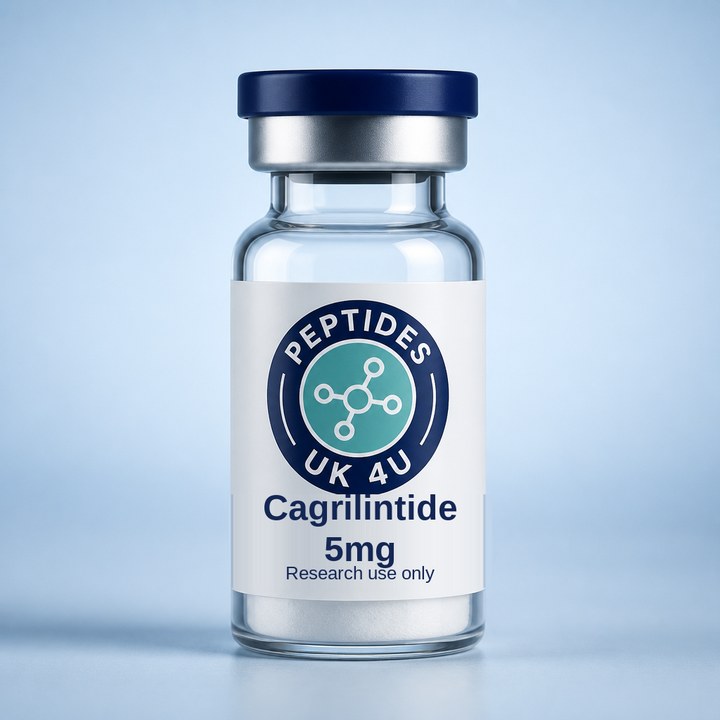
Cagrilintide is an amylin analog intended for once-weekly subcutaneous injection to promote satiety and aid in weight management. Doses are typically titrated weekly from 600 mcg to 4.5 mg after reconstitution of a 5 mg vial with 3.0 mL of bacteriostatic water.
- Amylin analog for weight management.
- Administered once weekly via subcutaneous injection.
- Requires gradual dose titration to minimize side effects.
- Reconstitute 5mg vial with 3.0 mL bacteriostatic water.
- Primary side effects are gastrointestinal (nausea, vomiting).
Reconstitution
Vial strength
5 mg
Bacteriostatic water
3 mL
Concentration
1.67 mg/mL
1 unit = 0.01 mL = 16.7 mcg
- 1Draw 3.0 mL of bacteriostatic water using a sterile syringe.
- 2Slowly inject the water down the side of the vial, avoiding foaming or vigorous agitation.
- 3Gently swirl or roll the vial until the peptide powder is completely dissolved (do not shake).
- 4Label the reconstituted vial with the date and concentration. Refrigerate at 2-8 °C (35.6-46.4 °F), protected from light.
- 5Use the reconstituted solution within 30 days. Discard if it appears cloudy or contains particulate matter.
Dosing schedule
| Phase | Dose | On a U-100 syringe |
|---|---|---|
| Weeks 1-2 | 0.6 mg | 36 units (0.36 mL) |
| Weeks 3-4 | 1.2 mg | 72 units (0.72 mL) |
| Weeks 5-6 | 2.4 mg | 144 units (1.44 mL) |
| Weeks 7-16 (Maintenance) | 4.5 mg | 270 units (2.70 mL) |
Protocol detail
| Start | 0.6 mg weekly for the first 2 weeks to assess tolerability. |
|---|---|
| Escalate | Double the dose every 2 weeks (0.6 → 1.2 → 2.4 → 4.5 mg) as tolerated. |
| Target | Reach 4.5 mg weekly by Weeks 7-8 and maintain this dose. |
| Frequency | Once per week (subcutaneous) on the same day each week. |
| Timing | Any consistent time; rotate injection sites. |
Overview at a glance
| Goal | Support satiety, reduce food intake, and promote weight management. |
|---|---|
| Schedule | Weekly subcutaneous injections for 12-16 weeks or longer. |
| Dose Range | 0.6-4.5 mg weekly, with gradual titration every 2 weeks. |
| Reconstitution | 3.0 mL per 5 mg vial for a concentration of approximately 1.67 mg/mL. |
| Storage | Lyophilized: frozen. Reconstituted: refrigerated. Avoid repeated freeze–thaw cycles. |
How it works
Cagrilintide acts as an acylated, long-acting analog of amylin, a hormone that is naturally co-secreted with insulin by pancreatic beta cells. Amylin functions to induce satiety, slow gastric emptying, and suppress post-meal glucagon release. By activating central amylin receptors, particularly in specific brain regions, cagrilintide effectively diminishes appetite and overall caloric intake. The lipid modification in its structure extends its half-life, allowing for convenient once-weekly dosing and sustained metabolic effects.
Reported effects
- Significant reduction in body weight.
- Enhanced satiety and reduced food intake.
- Potential for greater weight loss when combined with semaglutide.
- Dose-dependent efficacy observed in clinical trials.
Reported side effects
- Nausea (most common)
- Vomiting
- Diarrhea
- Constipation
- Mild-to-moderate and transient gastrointestinal issues.
- Occasional mild injection-site reactions (redness, irritation).
Storage
Lyophilised (unmixed)
Store frozen at -20 °C (-4 °F) in dry, dark conditions; minimize moisture exposure.
After reconstitution
Refrigerate at 2-8 °C (35.6-46.4 °F) and use within 30 days. Avoid freeze-thaw cycles.
Supplies
| Peptide vials | For an 8-week protocol: 4 vials (17.4 mg total). For a 12-week protocol: 8 vials (35.4 mg total). For a 16-week protocol: 11 vials (53.4 mg total). |
|---|---|
| Syringes | U-100 insulin syringes for doses up to 72 units (Weeks 1-4). 3 mL syringes with 25-27G subcutaneous needles for doses above 100 units (Weeks 5+). Plan for one syringe per week. |
| Bacteriostatic Water | Use 3.0 mL per 5 mg vial for reconstitution. Approximately 2 x 10 mL bottles for 8 weeks, 3 bottles for 12 weeks, and 4 bottles for 16 weeks. |
| Alcohol Swabs | Two per week (one for vial stopper, one for injection site). Recommend a 100-count box for various cycle lengths. |
Important notes
- Always use a new sterile syringe for each injection.
- Rotate injection sites weekly (abdomen, thighs, upper arms) to prevent local irritation.
- Gradual dose escalation helps minimize gastrointestinal side effects.
- Document weekly doses, injection sites, and any adverse effects.
- For doses requiring over 1.0 mL, use appropriately sized syringes (e.g., 3 mL).
Frequently asked questions
What is Cagrilintide used for?
Cagrilintide is an amylin mimetic peptide primarily used in research protocols for its potential role in weight management. It works by influencing satiety and reducing food intake.
How often is Cagrilintide injected?
Cagrilintide is typically administered once weekly via subcutaneous injection due to its long-acting properties. It's important to choose a consistent day for the weekly injection.
Why is dose titration necessary with Cagrilintide?
Gradual dose escalation, starting with a lower dose and slowly increasing over several weeks, is recommended to help the body adapt and minimize potential gastrointestinal side effects like nausea and vomiting, which are common at higher doses.
Can Cagrilintide be mixed with other peptides?
While Cagrilintide has been studied in combination with semaglutide, mixing it with other peptides for administration is not generally recommended without specific guidance due to potential interactions or stability issues. Always follow a specific, approved protocol if combining treatments.
Educational reference only. These figures summarise how Cagrilintide is commonly described in research literature and supplier documentation, including the Cagrilintide listing at peptidesuk4u.co.uk. They are not a prescription, not medical advice, and not a recommendation to self-administer anything.
Related protocols
Cagrilintide (10 mg Vial)
Weekly injection for weight management by enhancing satiety.
Mazdutide (10 mg Vial)
Dual GLP-1/glucagon agonist for weight loss and metabolic improvement.
Mazdutide (5 mg Vial)
Dual GLP-1/glucagon agonist for weight management and metabolic health.
Retatrutide (10 mg Vial)
Triple-agonist peptide for significant weight loss and metabolic health.