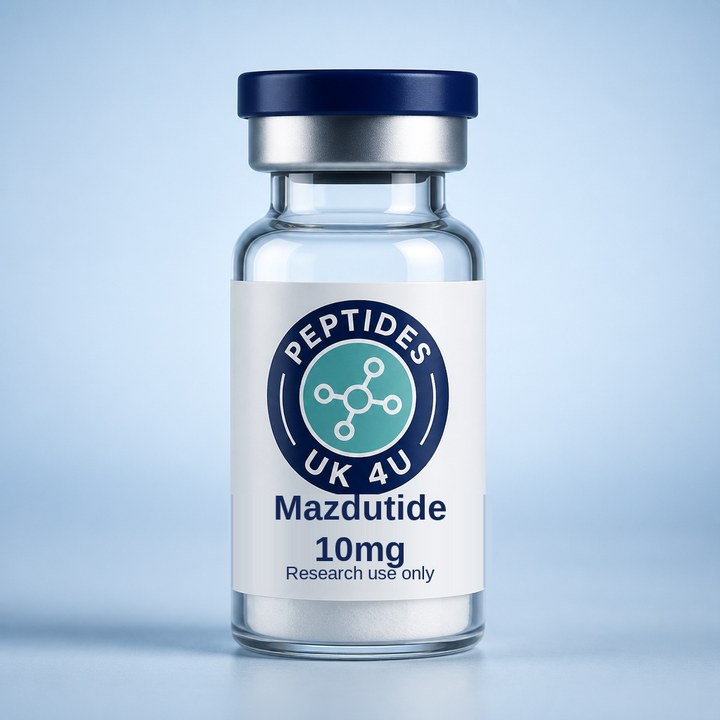
Mazdutide is a long-acting dual GLP-1/glucagon receptor agonist primarily used for chronic weight management and type 2 diabetes. It is typically administered via subcutaneous injection once weekly, with doses ranging from 2.5 mg to 5 mg, often with gradual titration to improve tolerability.
- Dual GLP-1 and glucagon receptor agonist.
- Shown to achieve 6-14% weight reduction over 24-48 weeks.
- Convenient once-weekly subcutaneous injection.
- Gradual dose titration improves tolerability of GI side effects.
- Typical dose range is 2.5-5 mg weekly, with some protocols reaching 10 mg.
Reconstitution
Vial strength
10 mg
Bacteriostatic water
3 mL
Concentration
3.33 mg/mL
1 unit = 0.01 mL ≈ 33.3 mcg
- 1Draw 3.0 mL of bacteriostatic water with a sterile syringe.
- 2Slowly inject the water down the inside wall of the Mazdutide vial, avoiding foaming.
- 3Gently swirl the vial until the peptide is fully dissolved; do not shake vigorously.
- 4Label the vial with the reconstitution date and store it in the refrigerator at 2-8 °C (35.6-46.4 °F), protected from light.
Dosing schedule
| Phase | Dose | On a U-100 syringe |
|---|---|---|
| Weeks 1-4 | 2.5 mg (2,500 mcg) | 75 units (0.75 mL) |
| Weeks 5-8+ | 5 mg (5,000 mcg) | 150 units (1.50 mL) |
Protocol detail
| Start | Begin with 2.5 mg once weekly for the initial 4 weeks to assess tolerability. |
|---|---|
| Increase | Advance to 5 mg weekly starting from week 5 and continue this dose for the remainder of the protocol (weeks 5-12+). |
| Frequency | Inject once per week via subcutaneous injection. |
| Cycle Length | A minimum of 8 weeks is suggested, with clinical evidence supporting protocols ranging from 12 to 48 weeks. |
| Timing | Administer the injection on the same day each week, ensuring to rotate injection sites to prevent irritation. |
Overview at a glance
| Goal | Support chronic weight management and metabolic improvement by activating both GLP-1 and glucagon receptors. |
|---|---|
| Schedule | Once-weekly subcutaneous injections for a minimum of 8-12 weeks, with clinical trials extending up to 48 weeks. |
| Dose Range | 2.5-5 mg weekly with gradual titration; advanced protocols may reach 10 mg. |
| Reconstitution | For standard dosing, use 3.0 mL of bacteriostatic water per 10 mg vial (resulting in ≈3.33 mg/mL). |
| Storage | Lyophilized peptide should be frozen at -20 °C (-4 °F). Reconstituted peptide must be refrigerated at 2-8 °C (35.6-46.4 °F) and discarded after 28 days. |
How it works
Mazdutide operates as a dual agonist, activating both GLP-1 and glucagon receptors. This unique mechanism combines the well-known appetite-suppressing and glucose-lowering effects of GLP-1 with the added benefit of increased energy expenditure through glucagon activation. This dual action facilitates robust weight loss, exceeding that of single-target GLP-1 agonists. Clinical trials have demonstrated significant body weight reductions and improvements in blood sugar control for individuals with type 2 diabetes. Its extended half-life allows for convenient once-weekly dosing, maintaining consistent therapeutic levels.
Reported effects
- Significant body weight reduction (6-14% over 24-48 weeks)
- Improved HbA1c levels in type 2 diabetes patients (~1.7% reduction)
- Positive metabolic effects, including better lipid profiles and glucose control
- Convenient once-weekly dosing enhances adherence
Reported side effects
- Common gastrointestinal issues (nausea, vomiting, diarrhea, constipation), usually mild-to-moderate and temporary
- Injection-site reactions (redness, swelling, discomfort) which can be minimized by rotating sites
- Risk of gastrointestinal side effects increases with higher doses (above 6 mg)
Storage
Lyophilised (unmixed)
Store frozen at -20 °C (-4 °F) or below, in a dry, dark place.
After reconstitution
Refrigerate at 2-8 °C (35.6-46.4 °F) for up to 28 days; avoid freezing or freeze-thaw cycles.
Supplies
| Peptide vials (Mazdutide, 10 mg each) | 3 vials for an 8-week protocol, 5 vials for 12 weeks, or 7 vials for 16 weeks. |
|---|---|
| Insulin Syringes (U-100, 1 mL or 3 mL) | 1 syringe per week (8-16 syringes for typical cycles). |
| Bacteriostatic Water (10 mL bottles) | 1-3 bottles depending on protocol length (e.g., 1 bottle for 8 weeks, 3 for 16 weeks). |
| Alcohol Swabs | Approximately 2 per week (100-count box recommended). |
Important notes
- Use a new sterile insulin syringe for each weekly injection and dispose of it properly.
- Rotate injection sites (abdomen, thighs, upper arms) weekly to reduce local irritation.
- For doses requiring >3 mL volume, split the injection into two separate sites.
- Allow reconstituted vials to reach room temperature before drawing the dose.
- Document dose, injection site, and any side effects to monitor progress.
Frequently asked questions
What is the primary role of Mazdutide?
Mazdutide is primarily used for chronic weight management and improving metabolic health, particularly in individuals with type 2 diabetes or obesity, due to its dual action on GLP-1 and glucagon receptors.
How often should I inject Mazdutide?
Mazdutide is designed for once-weekly subcutaneous injection. It's recommended to administer it on the same day each week to maintain consistent levels.
What are the common side effects of Mazdutide?
The most common side effects are gastrointestinal, including nausea, vomiting, diarrhea, and constipation. These are usually mild-to-moderate and tend to lessen over time, especially with gradual dose titration.
Why is dose titration important with Mazdutide?
Gradual dose titration, starting with a lower dose and slowly increasing, is crucial for improving tolerability and reducing the likelihood and severity of gastrointestinal side effects, which can otherwise lead to discontinuation.
Educational reference only. These figures summarise how Mazdutide is commonly described in research literature and supplier documentation. They are not a prescription, not medical advice, and not a recommendation to self-administer anything.
Related protocols
Mazdutide (5 mg Vial)
Dual GLP-1/glucagon agonist for weight management and metabolic health.
Retatrutide (20 mg Vial)
Triple-agonist peptide for substantial weight loss and metabolic health.
Semaglutide (10 mg Vial)
Weekly GLP-1 for weight loss and metabolic health.
Semaglutide (20 mg Vial)
Weekly GLP-1 agonist for weight loss and glucose control.