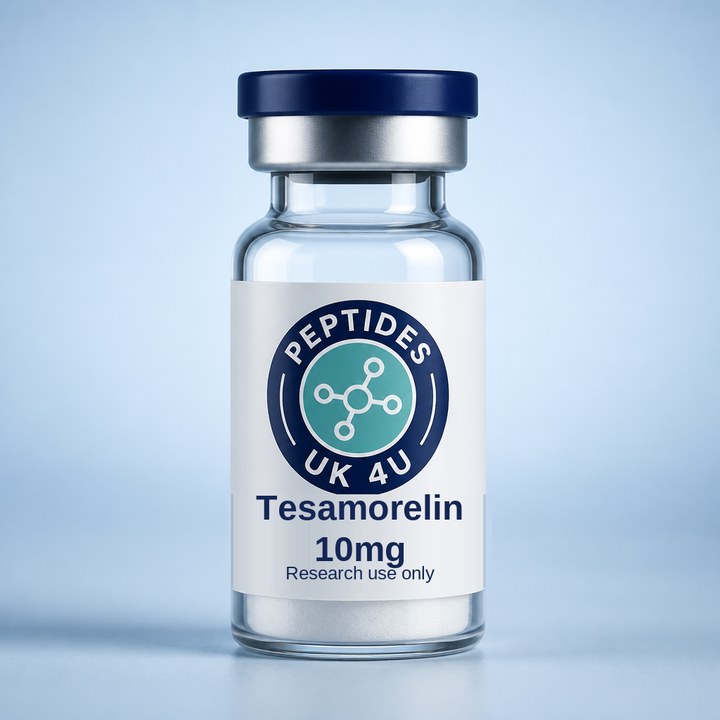
Tesamorelin is a synthetic peptide that mimics Growth Hormone-Releasing Hormone (GHRH), stimulating the body's natural production of growth hormone and subsequent IGF-1. It is primarily used to reduce visceral adipose tissue and offers metabolic benefits. Dosed subcutaneously, typically at 1-2 mg daily.
- FDA-approved for reducing visceral fat in HIV-associated lipodystrophy.
- Stimulates endogenous growth hormone and IGF-1 production.
- Standard dose is 2 mg daily after initial titration.
- Injected once daily, preferably in the evening.
Reconstitution
Vial strength
10 mg
Bacteriostatic water
3 mL
Concentration
3.33 mg/mL
1 unit = 0.01 mL = 33.3 mcg
- 1Draw 3.0 mL of bacteriostatic water using a sterile syringe.
- 2Slowly inject the water down the inner wall of the vial, avoiding direct contact with the peptide powder to prevent foaming.
- 3Gently swirl the vial until the powder is fully dissolved; do not shake.
- 4Label the reconstituted vial with the date and refrigerate it at 2–8 °C (35.6–46.4 °F), protected from light.
- 5Use the reconstituted solution within 7 days when prepared with bacteriostatic water.
Dosing schedule
| Phase | Dose | On a U-100 syringe |
|---|---|---|
| Week 1 | 1 mg | 30 units (0.30 mL) |
| Weeks 2-12+ | 2 mg | 60 units (0.60 mL) |
Protocol detail
| Week 1 | 1 mg (1000 mcg) once daily to evaluate tolerability. |
|---|---|
| Weeks 2+ | 2 mg (2000 mcg) once daily, which is the standard FDA-approved dose. |
| Frequency | Once per day via subcutaneous injection, ideally in the evening. |
| Cycle Length | Typically 12–26 weeks, with clinical trials supporting use up to 52 weeks under medical supervision. |
| Timing | Evening administration is recommended; ensure to rotate injection sites regularly. |
Overview at a glance
| Goal | Reduce visceral adipose tissue and improve lipid profiles by elevating GH/IGF-1 levels. |
|---|---|
| Schedule | Daily subcutaneous injections for 12–26 weeks, potentially extended to 52 weeks with medical oversight. |
| Dose | 2 mg (2000 mcg) daily following a 1-week titration period. |
| Reconstitution | 3.0 mL of water per 10 mg vial, yielding approximately 3.33 mg/mL. |
| Storage | Lyophilized peptide refrigerated; reconstituted solution refrigerated for up to 7 days; avoid freezing. |
How it works
Tesamorelin acts as a synthetic analog of Growth Hormone-Releasing Hormone (GHRH). It binds to specific GHRH receptors in the pituitary gland, stimulating the pulsatile release of the body's own growth hormone, which in turn elevates IGF-1 levels. This cascade promotes the breakdown of fats (lipolysis), supports protein synthesis, and induces beneficial metabolic changes. In clinical settings, daily Tesamorelin has been shown to significantly reduce visceral fat and improve lipid profiles over several months, especially in cases like HIV-associated lipodystrophy. Research also explores its potential for liver fat reduction and cognitive enhancement.
Reported effects
- Significant reduction in visceral adipose tissue.
- Improved lipid profiles and potential liver fat reduction.
- Enhanced cognitive function (research ongoing).
- Generally well-tolerated with sustained benefits during continuous use.
Reported side effects
- Injection-site reactions (redness, itching, pain).
- Musculoskeletal symptoms (joint pain, muscle aches, mild swelling).
- Occasional carpal tunnel symptoms (tingling/numbness).
- Potential for IGF-1 elevation and minor increases in HbA1c.
Storage
Lyophilised (unmixed)
Refrigerate at 2–8 °C (35.6–46.4 °F).
After reconstitution
Refrigerate at 2–8 °C (35.6–46.4 °F) and use within 7 days (with bacteriostatic water).
Supplies
| Peptide vials (Tesamorelin, 10 mg each) | Approx. 11 vials for 8 weeks, 17 for 12 weeks, 22 for 16 weeks (at 2mg/day). |
|---|---|
| Insulin Syringes (U-100, 1 mL capacity) | 7 syringes per week (1/day) – e.g., 56 for 8 weeks, 84 for 12 weeks. |
| Bacteriostatic Water (10 mL bottles) | Approx. 4 bottles for 8 weeks, 6 for 12 weeks (using 3.0 mL per vial). |
| Alcohol Swabs | 2 per day (one for vial, one for injection site) – e.g., 112 for 8 weeks. |
Important notes
- Always use a new sterile insulin syringe for each injection and dispose of it in a sharps container.
- Rotate injection sites (abdomen, thighs, upper arms) to minimize local irritation.
- Inject slowly and allow a few seconds before withdrawing the needle.
- Monitor IGF-1 levels periodically due to its potent GH-stimulating effects.
- Document daily doses and injection site rotation for consistency.
Frequently asked questions
What is Tesamorelin primarily used for?
Tesamorelin is mainly used to reduce excess visceral fat, particularly in conditions like HIV-associated lipodystrophy, by stimulating the body's natural growth hormone production.
How often should I inject Tesamorelin?
Tesamorelin is typically injected once daily, subcutaneously. Evening administration is often recommended to align with natural nocturnal growth hormone release.
Can I take Tesamorelin for more than 12 weeks?
Clinical trials have shown Tesamorelin can be effectively and safely used for up to 26 weeks, and even up to 52 weeks under appropriate medical supervision.
Are there any specific lifestyle recommendations while using Tesamorelin?
Yes, combining Tesamorelin with a balanced, high-protein diet, regular exercise including resistance and aerobic training, and ensuring 7-9 hours of quality sleep can help maximize its benefits and improve overall metabolic health.
Educational reference only. These figures summarise how Tesamorelin is commonly described in research literature and supplier documentation, including the Tesamorelin listing at peptidesuk4u.co.uk. They are not a prescription, not medical advice, and not a recommendation to self-administer anything.
Related protocols
Tesamorelin (20 mg Vial)
GHRH analog stimulating GH/IGF-1 for visceral fat reduction and metabolic benefits.
Tesamorelin (5 mg Vial)
Synthetic GHRH analog boosting natural Growth Hormone for fat reduction.
MOTS-c (10 mg Vial)
Metabolic regulator enhancing insulin sensitivity, fat oxidation, and exercise capacity.
MOTS-c (20 mg Vial)
Metabolic regulator enhancing insulin sensitivity, fat oxidation, and exercise capacity.