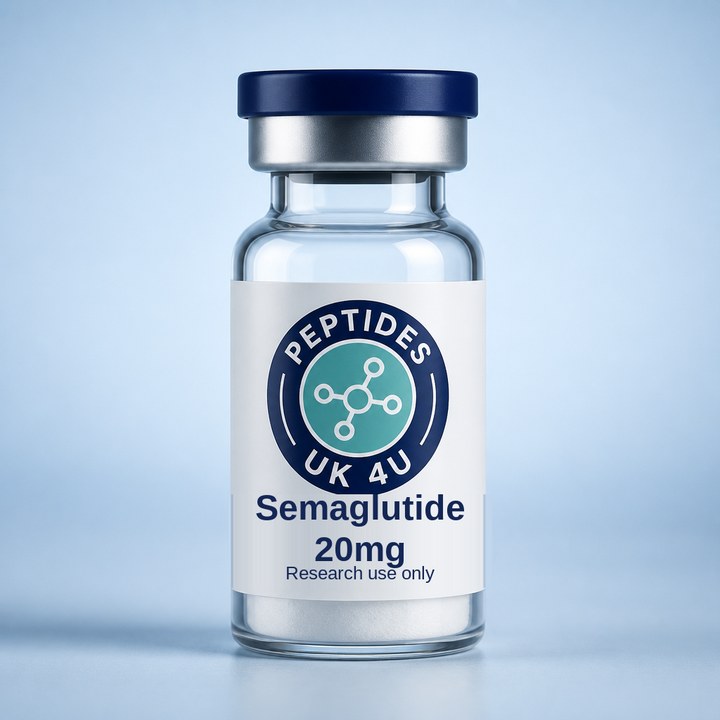
Semaglutide is a GLP-1 receptor agonist primarily used for weight management and glycemic control. It is administered via once-weekly subcutaneous injections with a gradual dose escalation protocol to improve tolerability, typically over 16+ weeks, reaching a maintenance dose of 2.4 mg weekly.
- Once-weekly subcutaneous injections.
- Gradual dose escalation protocol for improved tolerability.
- Target maintenance dose is 2.4 mg weekly.
- Reconstitute 20 mg vial with 3.0 mL bacteriostatic water.
- Significant weight loss and improved glycemic control.
Reconstitution
Vial strength
20 mg
Bacteriostatic water
3 mL
Concentration
6.67 mg/mL
1 unit = 0.01 mL = 66.7 mcg
- 1Draw 3.0 mL of bacteriostatic water using a sterile syringe.
- 2Slowly inject the water down the inner wall of the vial to prevent foaming; do not shake.
- 3Gently swirl or roll the vial until the white powder completely dissolves.
- 4Label the reconstituted vial with the date and store in the refrigerator between 2–8 °C (35.6–46.4 °F), away from light.
- 5Ensure the reconstituted solution is used within 28 days for optimal potency and safety.
Dosing schedule
| Phase | Dose | On a U-100 syringe |
|---|---|---|
| Weeks 1–4 | 250 mcg | 4 units (0.04 mL) |
| Weeks 5–8 | 500 mcg | 7.5 units (0.075 mL) |
| Weeks 9–12 | 1000 mcg | 15 units (0.15 mL) |
| Weeks 13–16 | 1700 mcg | 25.5 units (0.255 mL) |
| Weeks 17+ (Maintenance) | 2400 mcg | 36 units (0.36 mL) |
Protocol detail
| Weeks 1–4 | 250 mcg (0.25 mg) once weekly to assess initial tolerance. |
|---|---|
| Weeks 5–8 | 500 mcg (0.5 mg) once weekly. |
| Weeks 9–12 | 1000 mcg (1.0 mg) once weekly. |
| Weeks 13–16 | 1700 mcg (1.7 mg) once weekly. |
| Weeks 17+ (Maintenance) | 2400 mcg (2.4 mg) once weekly as the ongoing maintenance dose. |
| Frequency | Administer once per week via subcutaneous injection. |
| Timing | Inject on the same specific day each week at any time, rotating injection sites consistently. |
Overview at a glance
| Goal | Support chronic weight management and improve metabolic health through GLP-1 receptor activation. |
|---|---|
| Schedule | Weekly subcutaneous injections with a gradual dose escalation over 16-20+ weeks. |
| Dose Range | Weekly doses from 250 mcg (0.25 mg) up to 2400 mcg (2.4 mg) with stepwise increases every 4 weeks to enhance tolerability. |
| Reconstitution | Mix 3.0 mL of bacteriostatic water with a 20 mg vial, resulting in approximately 6.67 mg/mL for precise insulin syringe measurements. |
| Storage | Freeze lyophilized powder at -20 °C (-4 °F); store reconstituted solution refrigerated at 2–8 °C (35.6–46.4 °F) and use within 28 days. |
How it works
Semaglutide is a glucagon-like peptide-1 (GLP-1) receptor agonist that closely mimics human GLP-1. It aids weight loss by reducing appetite and food intake through effects on the central nervous system, slowing gastric emptying, and improving blood sugar control by stimulating insulin release in a glucose-dependent manner. Its extended half-life of roughly seven days, due to albumin binding, allows for convenient once-weekly dosing. Clinical studies highlight its effectiveness in promoting significant body weight reduction, typically 10-15%, especially when combined with lifestyle interventions. The 2.4 mg weekly dose is FDA-approved for chronic weight management.
Reported effects
- Significant body weight reduction (10-15% in trials)
- Improved glycemic control and reduced insulin resistance
- Reduced appetite and food cravings
- Potential cardiovascular benefits
- Convenient once-weekly dosing schedule
Reported side effects
- Gastrointestinal issues (nausea, vomiting, diarrhea, constipation)
- Injection-site reactions (redness, swelling)
- Hypoglycemia (especially when combined with other diabetes medications)
- Rare serious risks: pancreatitis, gallbladder issues, kidney injury
- Thyroid C-cell tumors (observed in rodents)
Storage
Lyophilised (unmixed)
Freeze at -20 °C (-4 °F)
After reconstitution
Refrigerate at 2–8 °C (35.6–46.4 °F), use within 28 days
Supplies
| Peptide vials | 1-2 vials (20 mg each) depending on cycle length (e.g., 1 vial for 16 weeks, 2 vials for 20+ weeks with maintenance) |
|---|---|
| Insulin Syringes (U-100) | Approximately 1 syringe per week for the duration of the cycle (e.g., 20 syringes for 20 weeks) |
| Bacteriostatic Water | One 10 mL bottle will suffice for reconstituting 1-2 vials over 20 weeks, using 3.0 mL per vial. |
| Alcohol Swabs | At least two per week (one for vial, one for injection site); a 100-count box is recommended for longer cycles. |
Important notes
- Always use a new, sterile insulin syringe for each injection and dispose of it properly in a sharps container.
- Rotate injection sites regularly (abdomen, thighs, upper arms) to prevent skin irritation and ensure consistent absorption.
- Inject the solution slowly, waiting a few seconds before needle withdrawal to ensure full delivery and prevent leakage.
- Maintain a consistent weekly administration day; if a dose is missed, take it within 5 days.
- The gradual dose escalation minimizes common gastrointestinal side effects and improves tolerability.
Frequently asked questions
What is the typical starting dose for Semaglutide and how quickly does it increase?
The protocol generally starts with a 250 mcg (0.25 mg) weekly dose for the first four weeks. The dose is then gradually increased every four weeks, progressing through 500 mcg, 1000 mcg, and 1700 mcg, until reaching the maintenance dose of 2400 mcg (2.4 mg) in Week 17 and beyond.
How should I store Semaglutide after it has been reconstituted?
Once reconstituted with bacteriostatic water, Semaglutide should be stored in the refrigerator, between 2–8 °C (35.6–46.4 °F), and kept away from light. It is recommended to use the solution within 28 days after reconstitution to ensure its potency and safety.
What should I do if I miss a weekly Semaglutide injection?
If you miss your weekly Semaglutide dose, you should administer it as soon as you remember, provided it is within 5 days of your scheduled dose. If more than 5 days have passed, it's generally best to skip the missed dose and resume your regular schedule on your next planned injection day.
Can I inject Semaglutide in the same spot every week?
No, it is important to rotate your injection sites for each dose. Regularly changing the injection site (e.g., between the abdomen, thighs, and upper arms) helps prevent localized skin irritation, lipohypertrophy, and ensures consistent absorption of the peptide.
Educational reference only. These figures summarise how Semaglutide is commonly described in research literature and supplier documentation, including the Semaglutide listing at peptidesuk4u.co.uk. They are not a prescription, not medical advice, and not a recommendation to self-administer anything.
Related protocols
Semaglutide (10 mg Vial)
Weekly GLP-1 for weight loss and metabolic health.
Semaglutide (30 mg Vial)
Weekly GLP-1 agonist for weight loss and glucose control.
Semaglutide (5 mg Vial)
Weekly injections for weight management and metabolic health.
Mazdutide (5 mg Vial)
Dual GLP-1/glucagon agonist for weight management and metabolic health.