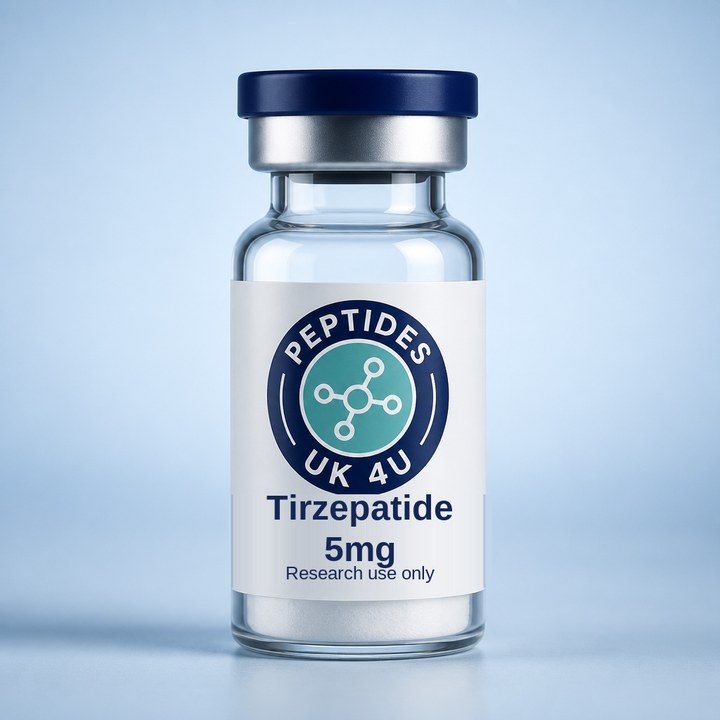
Tirzepatide is a dual GLP-1 and GIP receptor agonist peptide used to support glycemic control and weight management. It is typically dosed once weekly via subcutaneous injection with a gradual titration schedule over several weeks to reach a maintenance dose.
- Activates both GLP-1 and GIP receptors.
- Administered once weekly due to ~5-day half-life.
- Gradual dose escalation helps minimize gastrointestinal side effects.
- Can lead to significant glycemic control and weight reduction.
Reconstitution
Vial strength
5 mg
Bacteriostatic water
2 mL
Concentration
2.5 mg/mL
1 unit = 0.01 mL = 25 mcg
- 1Draw 2.0 mL of bacteriostatic water using a sterile syringe.
- 2Slowly inject the water down the inner wall of the Tirzepatide vial, avoiding foaming.
- 3Gently swirl or roll the vial until the powder is completely dissolved; do not shake.
- 4Label the reconstituted vial with the date and refrigerate at 2–8 °C (35.6–46.4 °F), protected from light.
- 5Ensure the solution is used within 28 days of reconstitution.
Dosing schedule
| Phase | Dose | On a U-100 syringe |
|---|---|---|
| Weeks 1–4 | 2.5 mg | 100 units (1.0 mL) |
| Weeks 5–8 | 5 mg | 100 units (1.0 mL) x 2 injections |
| Weeks 9–12 | 7.5 mg | 100 units (1.0 mL) x 3 injections |
| Weeks 13–16 | 10 mg | 100 units (1.0 mL) x 4 injections |
Protocol detail
| Start | Begin with 2.5 mg once weekly for the initial 4 weeks. |
|---|---|
| Escalate | Increase the dose by 2.5 mg every 4 weeks, provided it is well-tolerated. |
| Maintenance | Weekly doses of 5–15 mg are typically used based on individual response and tolerability. |
| Frequency | Administer once per week via subcutaneous injection, always on the same day. |
| Timing | Injection can occur at any time of day, irrespective of food intake. Remember to rotate injection sites. |
Overview at a glance
| Goal | Support glycemic control, weight management, and metabolic health by activating dual incretin receptors. |
|---|---|
| Schedule | Weekly subcutaneous injection on the same day each week for 12–16+ weeks. |
| Dose Range | 2.5–15 mg weekly with increases every 4 weeks. |
| Reconstitution | 2.0 mL bacteriostatic water per 5 mg vial for a 2.5 mg/mL concentration. |
| Storage | Lyophilized vials frozen; reconstituted solution refrigerated for up to 28 days. |
How it works
Tirzepatide acts as a dual agonist, simultaneously stimulating both GLP-1 (glucagon-like peptide-1) and GIP (glucose-dependent insulinotropic polypeptide) receptors. This dual action enhances the body's insulin production when glucose levels are high, suppresses glucagon release, slows down stomach emptying, and helps regulate appetite by increasing feelings of fullness. The combined effect of GIP and GLP-1 signaling contributes to superior outcomes in weight loss and blood sugar control compared to therapies targeting only GLP-1. Its prolonged half-life of approximately 5 days allows for convenient once-weekly dosing.
Reported effects
- Significant reductions in HbA1c for type 2 diabetes.
- Substantial body weight loss.
- Potential improvements in lipid profiles and blood pressure.
- Enhanced glucose-dependent insulin secretion.
- Suppression of glucagon release.
Reported side effects
- Nausea, diarrhea, vomiting, constipation (typically mild-to-moderate and dose-dependent).
- Injection-site reactions (e.g., mild redness or irritation).
Storage
Lyophilised (unmixed)
Store at -20 °C (-4 °F) in dry, dark conditions. Minimize moisture exposure.
After reconstitution
Refrigerate at 2–8 °C (35.6–46.4 °F), protected from light. Do not freeze. Use within 28 days.
Supplies
| Peptide vials (Tirzepatide, 5 mg each) | Approx. 6 vials for 8 weeks (2.5→5 mg/wk), 12 vials for 12 weeks (2.5→7.5 mg/wk), or 20 vials for 16 weeks (2.5→10 mg/wk). |
|---|---|
| Insulin Syringes (U-100, 1 mL) | Approx. 12 for 8 weeks, 24 for 12 weeks, or 40 for 16 weeks. |
| Bacteriostatic Water (10 mL bottles) | Use 2.0 mL per vial. Approx. 2 bottles for 8 weeks, 3 bottles for 12 weeks, or 4 bottles for 16 weeks. |
| Alcohol Swabs | At least 2 per week. Recommend 1 x 100-count box per cycle. |
| Sharps Container | For safe disposal of used needles and syringes. |
Important notes
- Always use new, sterile insulin syringes and dispose of them safely in a sharps container.
- Rotate injection sites among the abdomen, thighs, and upper arms to minimize irritation.
- For doses requiring multiple injections, administer each at a different site consecutively.
- Inject slowly and pause before withdrawing the needle.
- Document doses, dates, and injection sites for consistent tracking.
- Gradual dose titration is crucial to mitigate initial gastrointestinal side effects.
Frequently asked questions
How quickly can I expect to see results with Tirzepatide?
Individual responses vary, but clinical trials show significant improvements in glycemic control and weight reduction can be observed over several weeks to months, typically with the gradual dose escalation.
What should I do if I miss a weekly dose?
If you miss a dose, administer it as soon as you remember, within 4 days of the scheduled dose. If more than 4 days have passed, skip the missed dose and resume your regular schedule the following week. Do not double your dose.
Can women who are pregnant or breastfeeding use Tirzepatide?
Tirzepatide is not recommended for use in pregnant or breastfeeding women. It is important to consult a healthcare professional for advice tailored to your specific situation.
Are there specific foods I should avoid while taking Tirzepatide?
While there are no universally banned foods, a balanced, calorie-appropriate diet is recommended. Given potential gastrointestinal side effects like nausea, some individuals might find it beneficial to avoid high-fat or very spicy foods, especially when first starting treatment or increasing the dose.
Educational reference only. These figures summarise how Tirzepatide is commonly described in research literature and supplier documentation, including the Tirzepatide listing at peptidesuk4u.co.uk. They are not a prescription, not medical advice, and not a recommendation to self-administer anything.
Related protocols
Tirzepatide (10 mg Vial)
Dual incretin agonist for glycemic control and weight management.
Tirzepatide (15 mg Vial)
Dual agonist for glucose control and weight management.
Tirzepatide (20 mg Vial)
Dual agonist for glucose control and weight management.
Tirzepatide (30 mg Vial)
Dual GLP-1/GIP agonist for glycemic control and weight management.